- Duration:
- 6 days
- Group Size:
- 4–6
- Tour Start:
- Upington, South Africa
- Tour End:
- Upington, South Africa
Budget South Africa Birding Tour: Northern Cape’s Desert Endemics
Details
2027
30 April – 05 May
Per person sharing
R41,430 ZAR
$2,649 USD / £1,997 GBP / €2,337 EUR
Single supplement
R9,660 ZAR
$617 USD / £465 GBP / €545 EUR
2028
30 April – 05 May
Per person sharing
R45,980 ZAR
$2,940 USD / £2,217 GBP / €2,594 EUR
Single supplement
R10,730 ZAR
$686 USD / £518 GBP / €605 EUR
Itinerary
Download ItineraryBudget South Africa Birding Tour: Northern Cape’s Desert Endemics
This short Northern Cape birding tour forms part of our carefully designed budget circuit, which also includes Cape Town, northern South Africa, and Zululand. Together, these tours offer an exceptional opportunity to explore South Africa’s most diverse regions, from arid deserts to fynbos scrub and lush subtropical forests. By combining these destinations, you can rapidly build an impressive and well-rounded bird list, gaining exposure to a remarkable diversity of species, habitats, and endemic-rich ecosystems across South Africa.
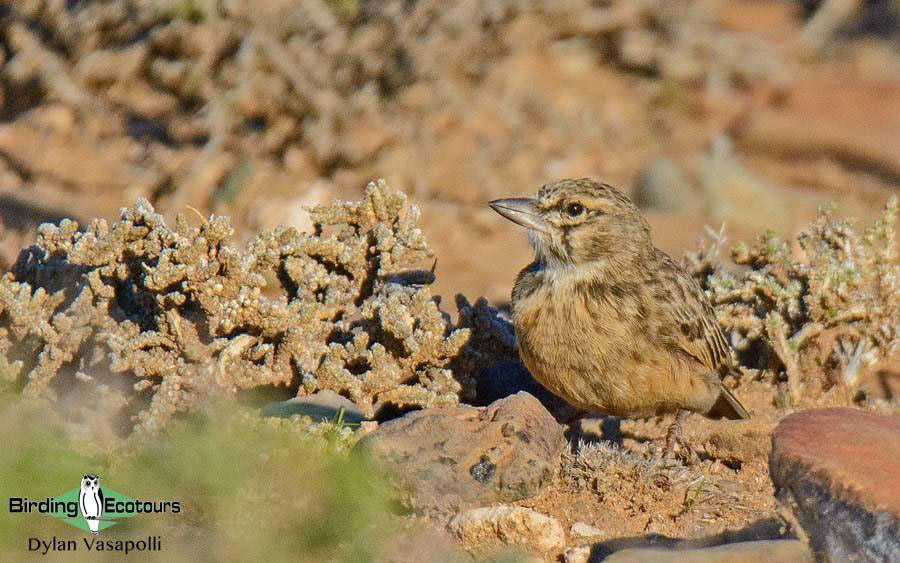
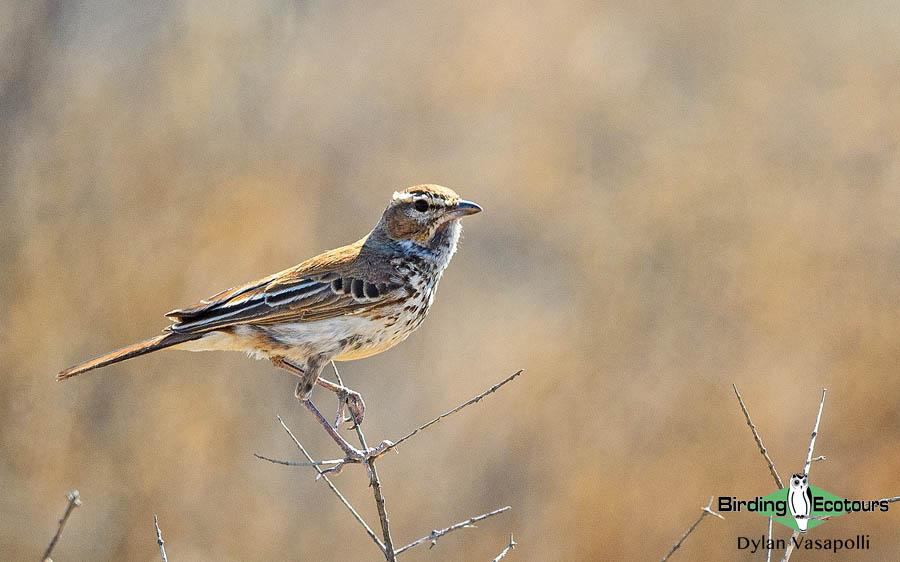 The charismatic Red Lark is one of our primary targets on this tour.
South Africa’s Northern Cape Province is a vast, rugged, and scenically striking region, showcasing the country’s most unique arid landscapes. The desert offers a sense of exclusivity and vast uninterrupted views that are increasingly rare today outside high-end private reserves.
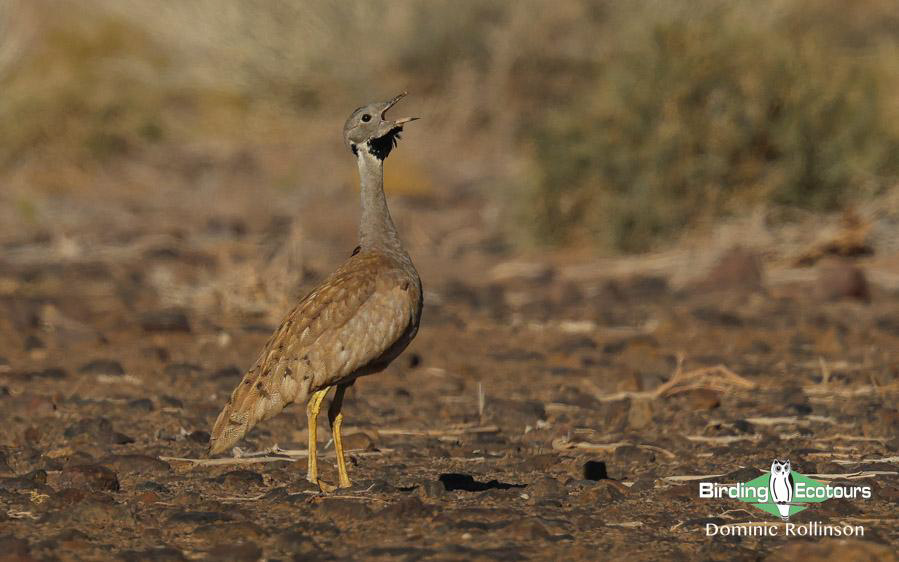
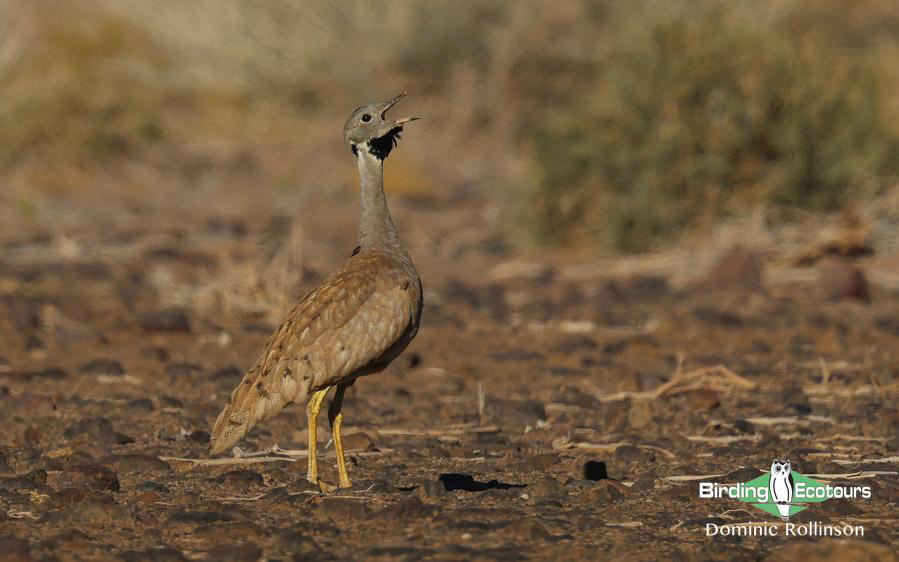 Being the masters of camouflage, Karoo Korhaans are usually heard before they are seen.
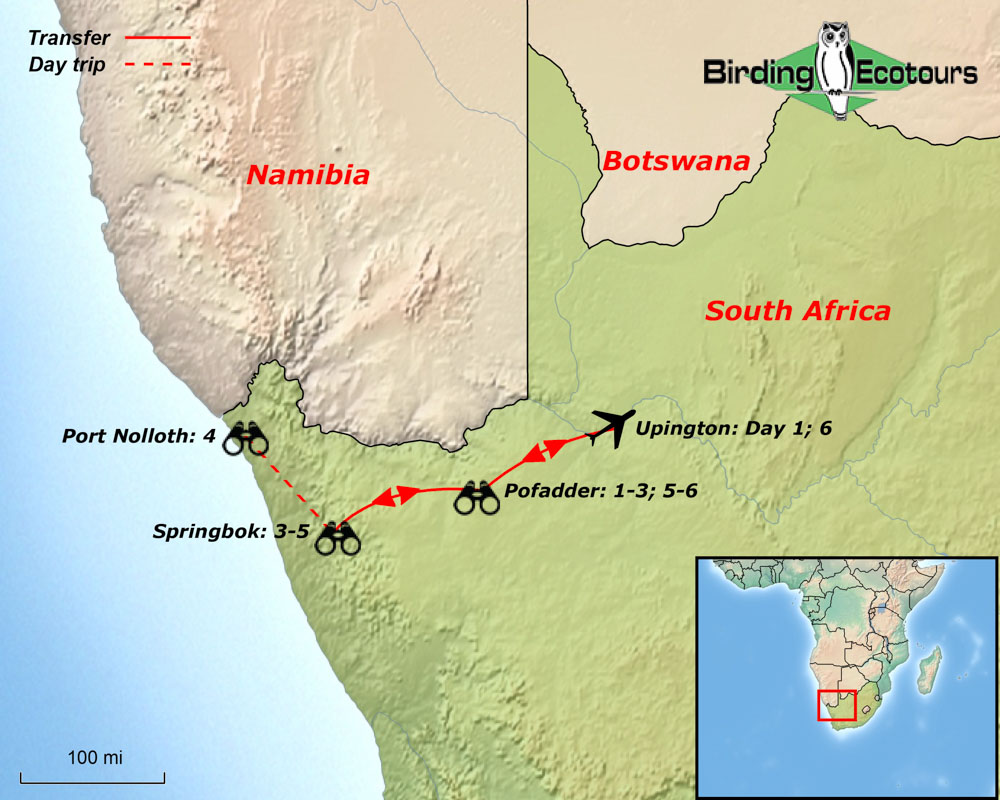
This budget tour focuses on the endemic and near-endemic species of the Namaqualand and Bushmanland regions. In the interest of keeping costs down, we stay in comfortable and reasonably priced accommodations while exploring a variety of key habitats. The tour begins around the town of Pofadder, where we traverse stark desert plains and dry river systems characteristic of the Nama Karoo. We will visit the nearby iconic red Koa Dunes which introduce a contrasting environment of iron-rich sands dotted with sparse grasses. Moving west towards Springbok and the Atlantic coastal belt, the habitat shifts into Succulent Karoo, where rocky outcrops and low shrubs, influenced by the cool Atlantic fog, dominate the landscape.
These areas host a fascinating range of species, and we will search for iconic specials such as Sclater’s, Dune, Stark’s and Red Larks, Black-eared Sparrow-Lark, Karoo Eremomela, Burchell’s Courser, Ludwig’s Bustard and the remarkable Sociable Weaver. Additionally, the region offers opportunities to see several rarely encountered mammals, these include Heaviside’s Dolphin, both Cape and Bat-eared Foxes, Aardwolf, and if we are lucky, possibly even Striped Polecat!
Detailed Itinerary (6 days/5 nights)
Day 1. Arrival in Upington and transfer to Pofadder
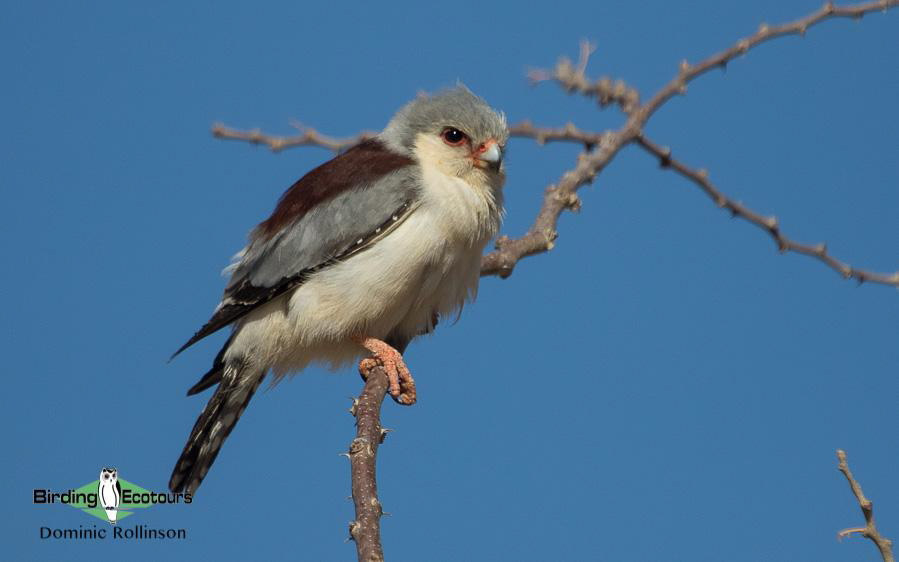
This tour begins in the desert city of Upington, and we ask that you arrive before 2 p.m. today. Upon arrival at Upington International Airport, you will be met by your guide, after which we will set off on the approximately three-hour drive to the small town of Pofadder, where we will be based for the next two nights. En route, it will be impossible to miss our first Sociable Weaver nests, often built on telephone poles and quiver trees scattered across the landscape. These extraordinary communal structures are the largest nests constructed by any bird and can become so heavy that they occasionally collapse the very supports they rest on. Within these nests, we may also encounter Pygmy Falcon, a regular and charismatic tenant.
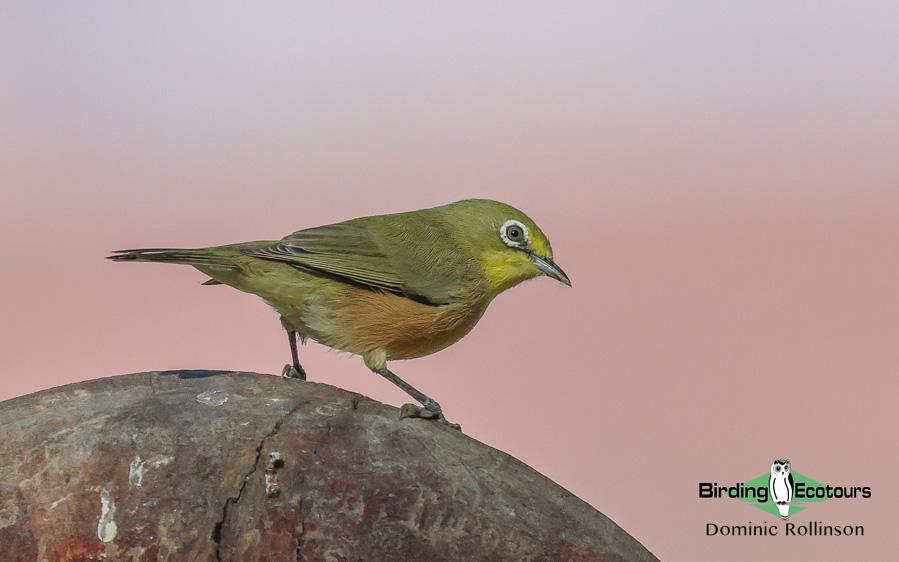
If time allows, we may also visit nearby riverine habitat, which can be particularly productive. Here we will search for specials such as Rosy-faced Lovebird and the prized Namaqua Warbler, along with Orange River White-eye and Karoo Thrush. The river itself and its margins can support species unlikely to be seen elsewhere on the tour, including Little Egret, Reed Cormorant, African Fish Eagle, and African Pied Wagtail.
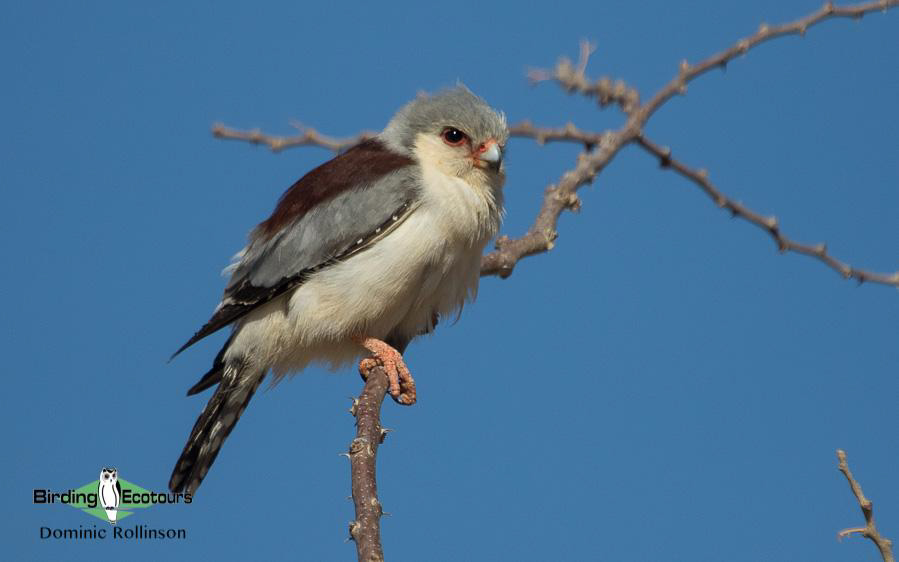 Pygmy Falcon is the smallest raptor on the African continent.
We should arrive in Pofadder around sunset, where we will check into our accommodation and settle in for the evening. Even around our base, there is some birding potential, with aerial specialists such as Bradfield’s Swift often seen overhead. In the evening, we will enjoy our first dinner together while discussing the exciting Northern Cape bird specials that lie ahead.
Overnight: Pofadder
Day 2. Pofadder Plains
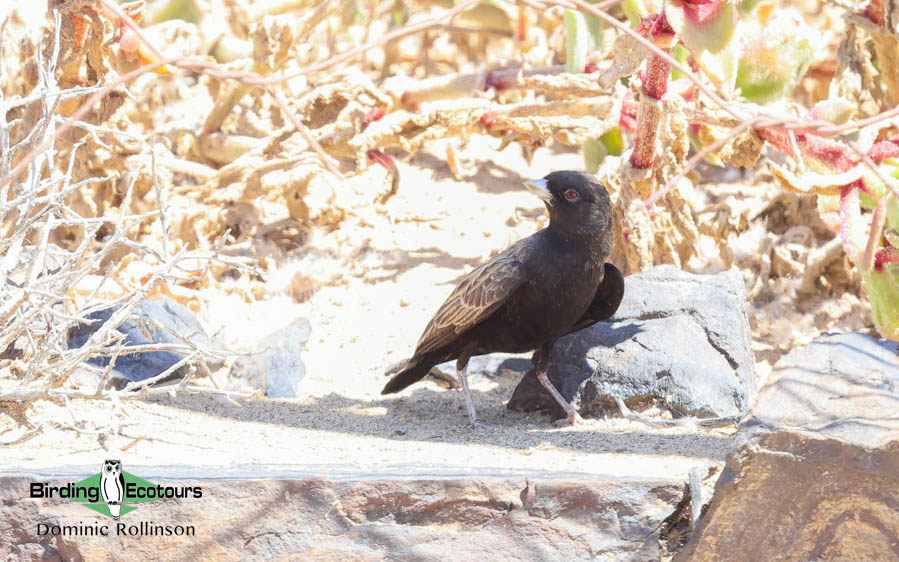
We begin the day exploring the open plains and arid scrub surrounding Pofadder, one of the most rewarding areas for Northern Cape desert birding. These seemingly barren landscapes support a remarkable diversity of specialized species, and we will spend the morning searching for some of the region’s most sought-after birds. Key targets include the nomadic and often elusive Sclater’s and Stark’s Larks, Black-eared Sparrow-Lark, and Burchell’s Courser, all of which can be unpredictable in their movements and require patience and persistence.
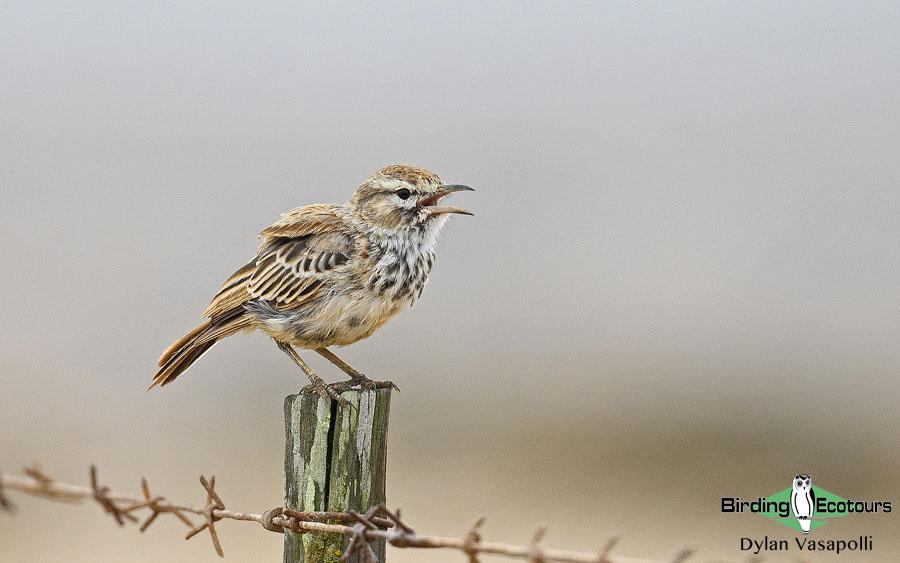
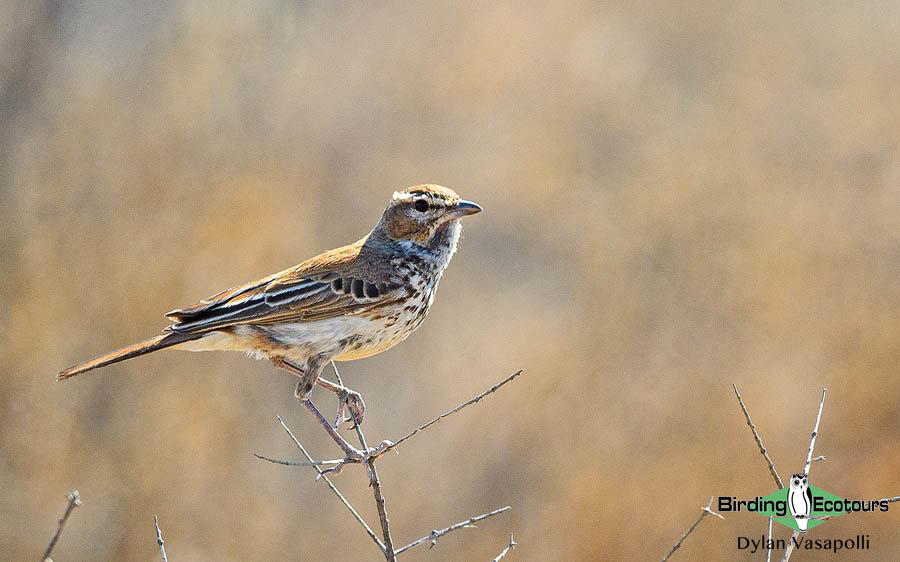
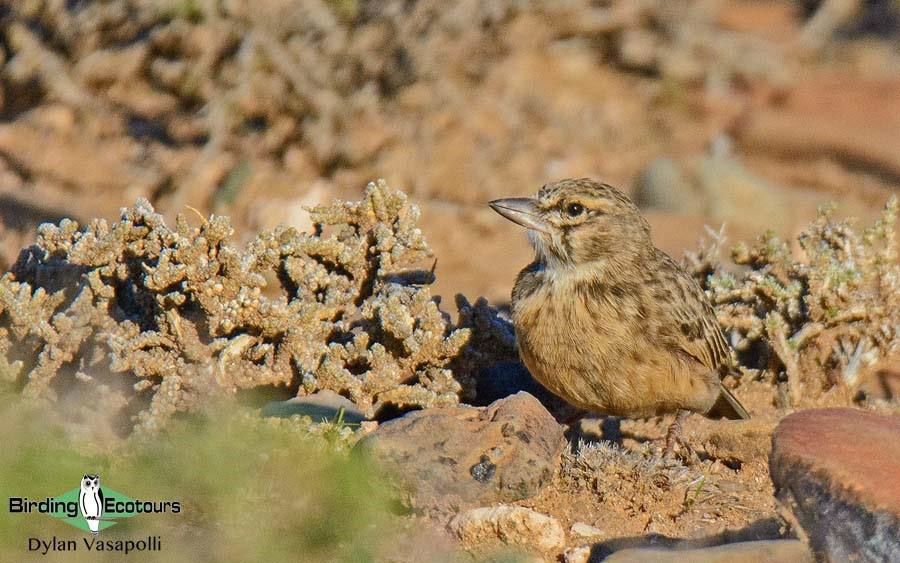 Sclater’s Lark usually takes a lot of effort to catch up with.
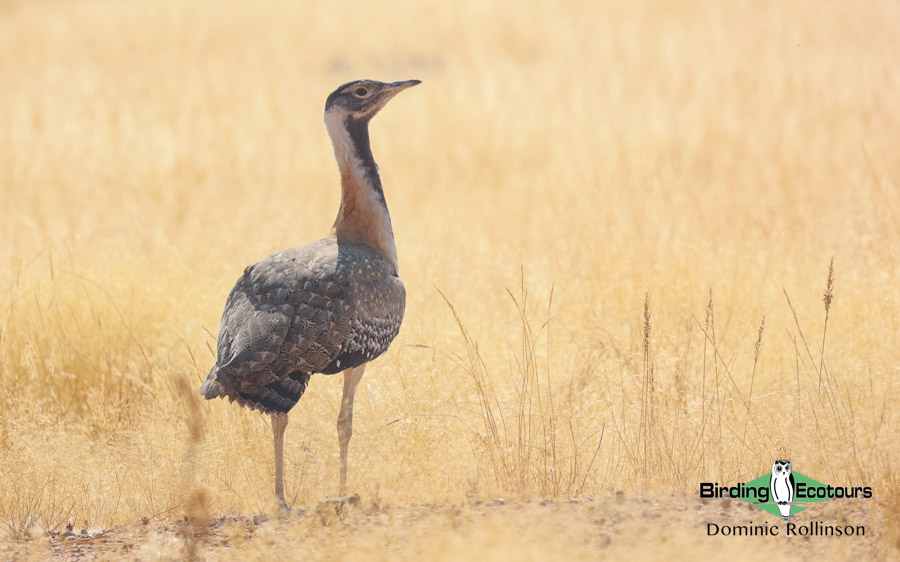
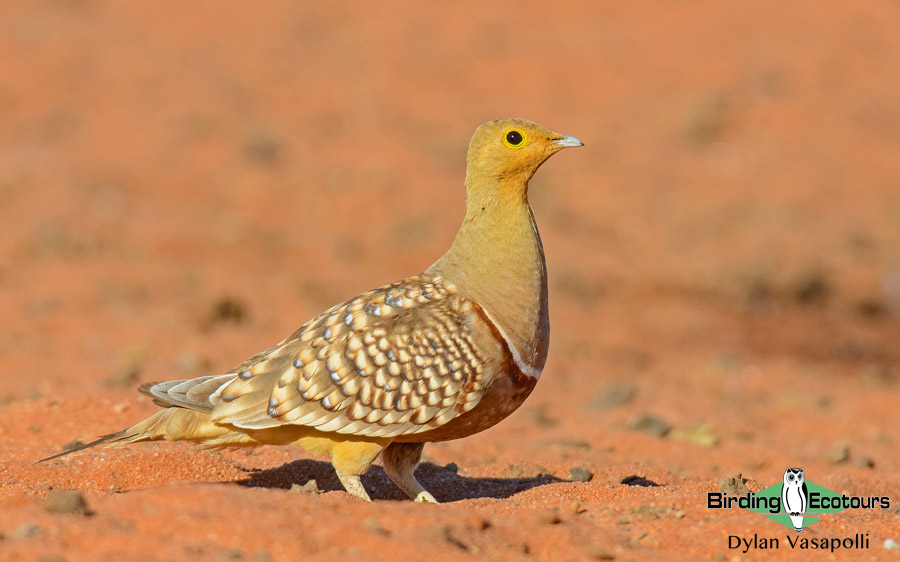
While focusing on these headline species, we will also keep a lookout for a wide range of supporting cast species typical of the Nama Karoo and Kalahari transition zone, such as Ludwig’s Bustard, Karoo Korhaan, Namaqua Dove, Double-banded Courser, Pale Chanting Goshawk, and Pygmy Falcon. The area also hosts several other lark species, including Karoo Long-billed, Spike-heeled, and Fawn-colored Larks, as well as the thick-billed form of Sabota Lark, alongside other passerines like Black-chested Prinia, Rufous-eared Warbler, Yellow-bellied Eremomela, Karoo Scrub Robin, and Chat Flycatcher. Water sources such as cattle troughs can be particularly productive, often providing excellent viewing opportunities.
After lunch in Pofadder, we may explore areas to the north of the town, potentially working our way toward sections of the Orange River similar to those of the first day of the tour, or keep traversing the Pofadder plains to continue searching for nomadic specials.
As the day winds down, we will return to Pofadder for the evening. Tonight (and possibly other nights), we may opt for a night drive, where we may be able to find nocturnal mammals such as the peculiar Bat-eared Fox.
Overnight: Pofadder
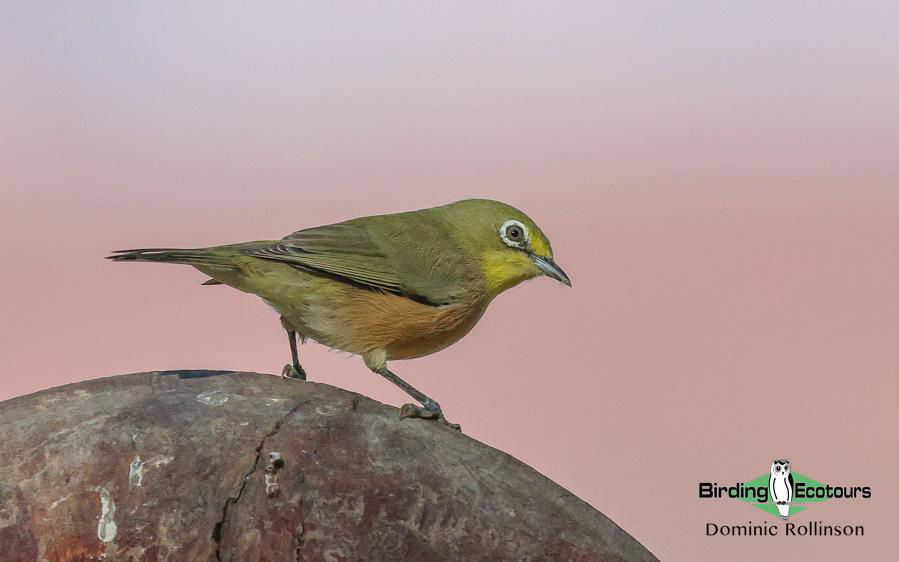 The tiny Orange River White-eye can be seen alongside riverside vegetation along its namesake river.
Day 3. Koa Dunes and transfer to Springbok
We begin the day in the iron-rich red sands of the Koa Dunes, one of the most important habitats in the region for arid-zone endemics and a stronghold for the highly localized Red Lark which is threatened by climate change and currently listed as Vulnerable by the IUCN. The surrounding plains and dune edges also support a variety of dry-country specialists similar to those around Pofadder itself, and we will keep an eye out for species such as Black-eared and Grey-backed Sparrow-Larks, Stark’s Lark, Namaqua Sandgrouse, Burchell’s and Double-banded Coursers, Lark-like Bunting and Red-headed Finch.
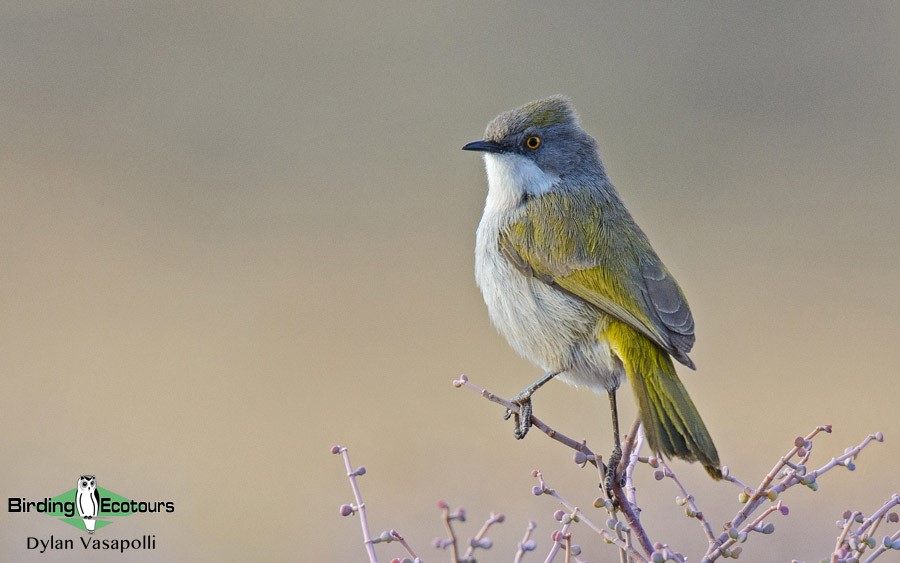
After the morning’s birding, we continuing west toward Springbok. In the afternoon, we will explore the rocky hills and shrublands of the surrounding area, likely with a visit to Goegap Nature Reserve and surrounds, which offers a chance at species such as Karoo Eremomela, Cinnamon-breasted Warbler, Karoo Lark and Grey Tit along with a variety of other Namaqualand specials.
We will settle in for the evening in Springbok, where we enjoy dinner together. There may also be an optional night drive, during which we could search for nocturnal species such as the extremely elusive Cape Eagle-Owl, along with other nocturnal wildlife of the region.
Overnight: Springbok
Day 4. Port Nolloth and Springbok surrounds
We begin the day traveling west from Springbok toward the remote coastal town of Port Nolloth, gradually descending into an increasingly sparse, desert-like landscape. This transition zone, influenced by the cold Benguela Current, supports a unique suite of arid-adapted species including Cape Long-billed and Tractrac Chat (particularly the pale coastal form). Our primary target near Port Nolloth itself is the localized Dune Lark, best searched for in the sandy coastal plains north of the town. The coastal strip can be surprisingly productive, and we will watch for species such as Grey Tit, Rufous-eared Warbler, and Karoo Prinia. Raptors such as Greater Kestrel and Pale Chanting Goshawk are often seen perched along roadsides, while Grey-backed Sparrow-Lark and Lark-like Bunting may also be encountered.
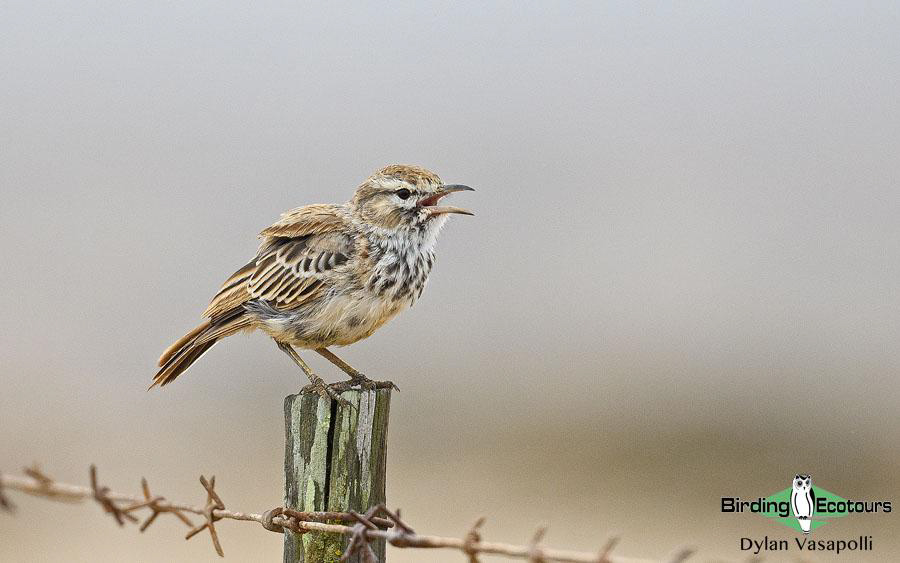 Namibia lost what was once considered its only endemic bird species following the lumping of Barlow’s Lark with Dune Lark, which occurs on South Africa’s north-west coast.
Along the rocky shoreline, we will scan for coastal waders and seabirds. Depending on conditions, we may see Ruddy Turnstone, Eurasian Whimbrel, Sanderling, White-fronted Plover, and African Oystercatcher, as well as perhaps Hartlaub’s Gull and Crowned and Bank Cormorants. With some luck, the near-endemic Heaviside’s Dolphin may also be seen moving through the cold Atlantic waters just offshore.
By late morning, we return inland toward the Springbok area, where we will spend the afternoon exploring the rocky ridges and shrublands of Goegap Nature Reserve and surrounds. This habitat supports a rich diversity of dry-country specialists, and our focus will be on key regional targets such as Karoo Eremomela and Cinnamon-breasted Warbler.
While searching for the above two targets, we are likely to encounter a variety of supporting species including Fairy Flycatcher, White-backed Mousebird, Layard’s Warbler, Spike-heeled and Karoo Larks, Karoo Chat, Mountain Wheatear, and Dusky Sunbird. The more open areas may also produce Booted Eagle and Ludwig’s Bustard, while scattered trees and drainage lines may hold species such as Acacia Pied Barbet, Pririt Batis, and Cape Penduline Tit. Mammal sightings are also possible here, with Gemsbok, Springbok, and Mountain Zebra all occurring in the area.
After a full day exploring both the stark Atlantic coastline and the rugged interior of Namaqualand, we return to Springbok for the evening.
Overnight: Springbok
Day 5. Filling gaps between Springbok to Pofadder
Today is designed to fill any gaps for target species we may have missed so far between Springbok and Pofadder, ensuring we maximize our chances of connecting with key birds still absent from our list. Whether it’s another attempt at a tricky lark (most notably the notoriously difficult Sclater’s Lark, which is often best searched for on a drive from Pofadder, or the true needle-in-a-haystack Black-eared Sparrow-Lark, which could turn up in a number of areas), a skulking warbler (both Cinnamon-breasted Warbler and Karoo Eremomela can require some persistence), or a wide-ranging but sparsely distributed Burchell’s Courser, today provides valuable time to consolidate our birding in the region.
The day will likely begin around the town of Springbok, giving us another opportunity to search for the suite of succulent Karoo specials mentioned on Day 4, should we have missed any. From there, we have the flexibility to revisit key areas such as the Koa Dunes from Day 3, as well as the open plains around Pofadder itself. By the time we return to our accommodation in Pofadder, we should have built a well-rounded list of Namaqualand and Bushmanland specials, having made the most of the diverse habitats explored over the past few days.
Overnight: Pofadder
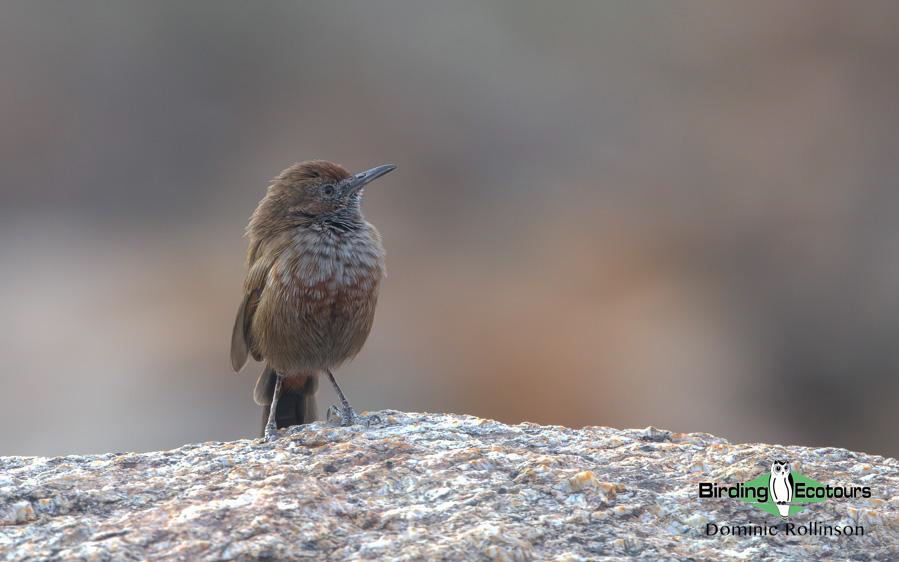
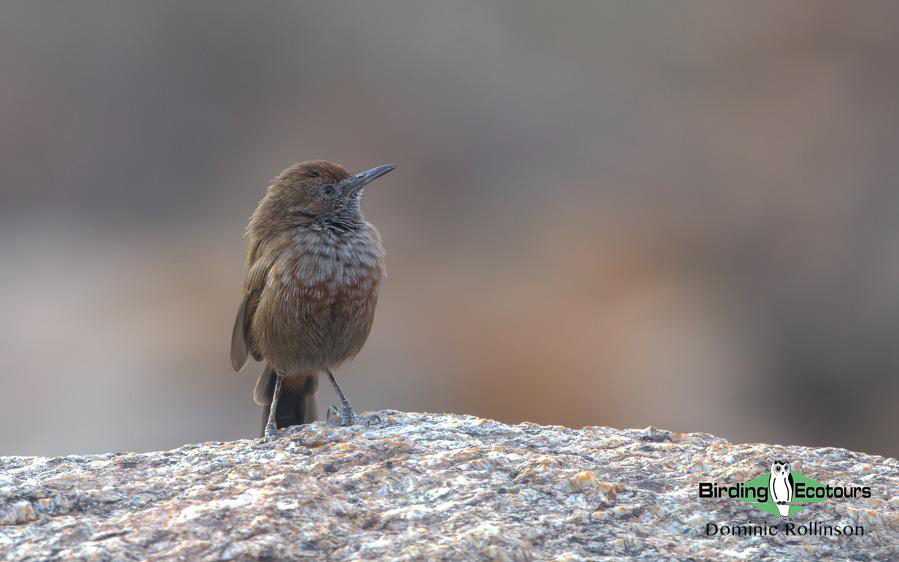
Cinnamon-breasted Warbler has a beautiful song which echoes through arid valleys.
Day 6. Pofadder to Upington and departure
We may enjoy a final morning of birding around Pofadder, making the most of any remaining opportunities before departing the region toward Upington International Airport. The route itself also still offers worthwhile birding, and we will keep an eye out for any final additions to the trip list. We may have time to pop into the Augrabies Falls National Park should we still be missing species like Namaqua Warbler.
We will arrive at Upington Airport around midday (please do not book flights any earlier than 2 p.m., alternatively you can depart the following morning) for onward afternoon departures, marking the end of a rewarding exploration of the Northern Cape.
You can extend your South African birding with a flight to Cape Town should you wish to join our Budget South Africa Birding Tour: Cape Town’s Fynbos Endemics which will start the following day.
Overnight: Not included
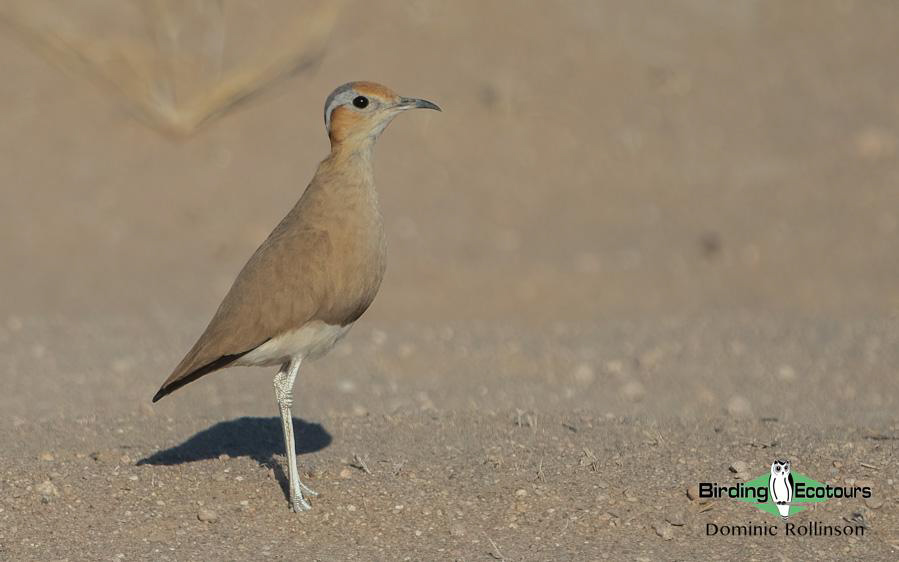
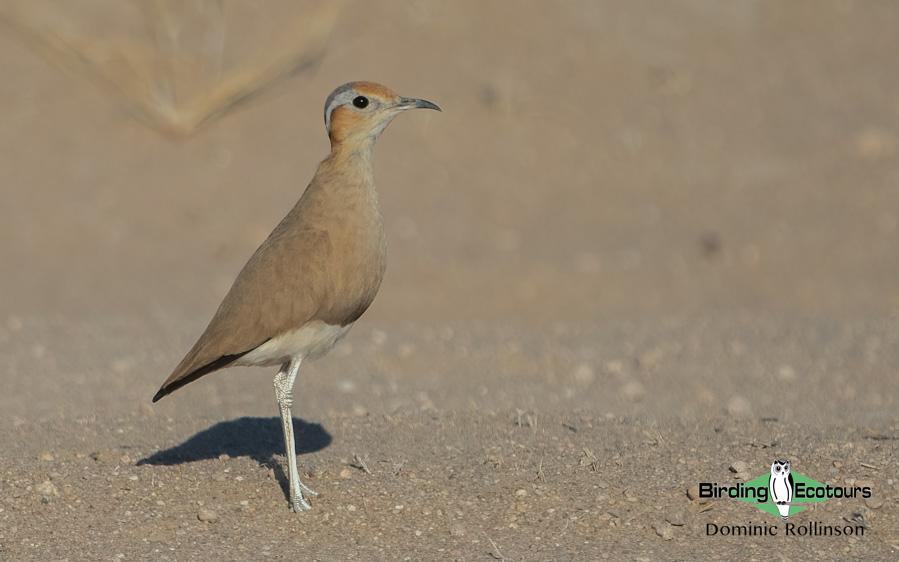 Burchell’s Courser is one of the most difficult and nomadic species we hope to find.
Please note that the itinerary cannot be guaranteed as it is only a rough guide and can be changed (usually slightly) due to factors such as availability of accommodation, updated information on the state of accommodation, roads, or birding sites, the discretion of the guides, and other factors. In addition, we sometimes have to use a different guide from the one advertised due to tour scheduling or other factors.
Map
Gallery
General Information
BUDGET SOUTH AFRICA: NORTHERN CAPE’S DESERT ENDEMICS
TOUR-SPECIFIC INFORMATION
GENERAL INFORMATION ABOUT SOUTH AFRICA CAN BE READ HERE
TOUR OUTLINE
This Northern Cape birding tour forms part of our carefully designed South African budget birding circuit, which also includes Cape Town, northern South Africa, and Zululand. Together, these tours offer an exceptional opportunity to explore South Africa’s most diverse regions, from arid deserts and Succulent Karoo scrubland to subtropical forests and the unique fynbos biome. By combining these destinations, participants can rapidly build an impressive and well-rounded bird list, gaining exposure to a remarkable diversity of species, habitats, and endemic-rich ecosystems across the country.
South Africa’s Northern Cape Province is a vast, rugged, and scenically striking region, showcasing the country’s most unique arid landscapes. The desert offers a sense of exclusivity and vast, uninterrupted views that are increasingly rare today. Unlike many wildlife destinations, the Northern Cape provides an intimate and unhurried experience in a landscape dominated by sweeping plains, iron-rich dune systems, and rocky succulent shrublands influenced by the cold Atlantic Ocean.
This budget tour focuses on the endemic and near-endemic species of the Namaqualand and Bushmanland regions. We will explore a variety of key habitats, including stark desert plains, dry river systems, the iconic red Koa Dunes, Succulent Karoo shrublands, and the remote Atlantic coastline near Port Nolloth. This diversity of landscapes supports a fascinating range of specialized species and makes the Northern Cape one of southern Africa’s most rewarding, if challenging, birding destinations.
PACE OF TOUR
This is a six-day tour and is considered medium-paced. The Northern Cape is a large and sparsely populated province, and while distances between key birding areas can be considerable, the generally good road network allows us to move efficiently. Accommodation is selected to provide convenient access to our key birding localities, reducing unnecessary transit time.
Most mornings begin with an opportunity to enjoy coffee together before heading out for the early morning birding session, which is typically the most productive time of day. After several hours in the field, we will either return to our accommodation for breakfast or enjoy a packed breakfast at a productive birding site. As with all dedicated birding tours, the daily schedule is designed to maximize time in the field, and lunch arrangements will vary depending on the day’s objectives and bird activity.
Some days may allow for a short rest during the warmest part of the afternoon before resuming birding later in the day, while on other days we may continue with only a brief break. The exact schedule will depend on weather conditions, target species encountered, and the overall progress of the tour.
Optional night drives may be offered on one or more evenings during the tour, providing opportunities to search for nocturnal mammals such as Bat-eared Fox and Striped Polecat. Participation is entirely optional, and guests are welcome to rest if they prefer.
Each evening, your guide will brief the group on the following day’s plans. While we operate according to a well-planned itinerary, we retain the flexibility to adapt our schedule to local conditions and to maximize our chances with key target species whenever the opportunity arises.
WALKING AND STYLE OF BIRDING
Much of our birding in the Northern Cape is conducted from, or in the immediate vicinity of, the vehicle. The open, arid terrain lends itself well to roadside birding, and we will frequently stop at carefully selected locations to scan the surrounding habitat for target species. This approach allows us to cover a large area efficiently while conserving energy in what can be a warm and exposed environment.
Participants should be comfortable with short walks on uneven or sandy ground, but no demanding hiking is required at any point during the tour.
LENGTH OF DRIVES
The Northern Cape is a geographically extensive province, and some drives between our accommodation bases are longer than on other tours in the South African budget circuit. The transfer between Upington and Pofadder on the first day is approximately 2.5 hours. These drives take place during the less productive midday period and include productive birding stops along the way.
On most days, the morning and late afternoon are spent birding in the vicinity of our accommodation base, minimizing transit during the key productive hours of the day. Road conditions throughout the region are generally good on the main routes, though some tracks leading to productive birding areas may be unpaved.
SAFETY
Throughout the tour, we spend the majority of our time in remote and rural areas that are considered generally safe for visitors. The Northern Cape is one of South Africa’s more sparsely populated provinces, and the areas we visit are far removed from the urban centers to which most travel advisories apply. As with travel anywhere in the world, sensible precautions should nonetheless be taken.
We recommend that valuables are not left unattended in the vehicle, particularly when stopping in towns. If you are ever uncertain about the safety of a particular location, please consult your guide, who will be happy to advise.
HEALTH, PESTS AND DANGEROUS ANIMALS
The Northern Cape is a predominantly arid region, and the risk of tick-borne illness is generally lower here than in more humid parts of South Africa. However, when walking in rocky or grassy areas, we recommend wearing long trousers and applying insect repellent to your socks, shoes, and lower legs as a precaution.
Venomous snakes occur in the region, including various adder species, and should be treated with respect if encountered. Such sightings are uncommon and are rarely a cause for concern when appropriate caution is exercised. Your guide will provide safety briefings as required.
Sun protection is particularly important in the Northern Cape, where the open, exposed landscape offers little shade, and the sun can be intense. We strongly recommend bringing high-factor sunscreen, a wide-brimmed hat, and suitable lightweight, long-sleeved clothing.
Please refer to the “South Africa General Information” document for more detailed information regarding wildlife, health considerations, and safety precautions.
TRANSPORTATION
A comfortable minibus will be used throughout the tour. To ensure fair viewing opportunities for all participants, a daily seat-rotation system will be implemented, which your guide will explain at the start of the tour.
Our intentionally small group size ensures that every participant has access to a window seat. Additionally, because we do not tow a trailer, the vehicle remains highly maneuverable, allowing us to respond quickly to bird sightings and access a wide variety of birding locations, including less-traveled tracks
Airport transfers on the first and final days of the tour are included in the tour price. Should you arrive in Upington before the tour begins or remain in South Africa after the tour concludes, additional transfers will be at your own expense. We will, however, be happy to assist in arranging any required transportation.
DOMESTIC FLIGHTS
No domestic flights are required within this tour itself. The tour begins and ends at Upington International Airport, which has regular connections to Cape Town and Johannesburg.
Participants combining this tour with other tours in our South African budget circuit may need to arrange domestic flights between destinations. For example, those wishing to continue with our Budget Cape Town tour will need to fly from Upington to Cape Town at the end of Day 6. We will provide guidance on all necessary travel arrangements.
ACCOMMODATION
Throughout the tour, we stay in comfortable guesthouses and bed-and-breakfast establishments that offer a good standard of accommodation and hospitality. While this is a budget-focused tour and accommodation may not match the standard of our premium itineraries, all properties are carefully selected to provide comfort, cleanliness, and convenient access to key birding sites.
We are based in Pofadder for the first two nights and return there for one further night mid-tour, with Springbok serving as our base for two nights. The accommodation in these smaller towns is functional and comfortable.
ELECTRICITY
Room lighting in some establishments in smaller Northern Cape towns may be of a lower wattage than participants are accustomed to. Those who enjoy reading in the evenings may wish to bring a small portable lamp or a good-quality headlamp.
We also recommend carrying an international travel adapter. South Africa is gradually transitioning to newer plug standards, and accommodation providers in smaller towns may use a variety of outlet types. Having a universal adapter will help ensure compatibility throughout the tour.
WEATHER
This tour takes place in late April and early May, which falls at the transition between summer and winter in the Northern Cape. Daytime temperatures at this time of year are generally pleasant and well-suited to birding, though conditions can vary considerably across the different habitats we visit.
The Namaqualand and Bushmanland interiors can be warm during the day, while the Atlantic coastal areas around Port Nolloth are often cool and overcast due to the influence of the cold Benguela Current. Early mornings can be cold or even very cold at all locations, particularly at higher elevations around Springbok, and warm layering is recommended for pre-dawn departures.
Rainfall is low in this region, but some precipitation remains possible at this time of year. We recommend packing clothing suitable for warm, cool, and potentially wet conditions to ensure comfort throughout the tour.
WHAT TO BRING: CLOTHING AND OTHER ITEMS
Please refer to our blog article, “What to Bring on a Birding Tour“ for detailed packing recommendations. This guide provides practical advice on clothing, optics, footwear, luggage, and other useful items to help you prepare for your Northern Cape birding adventure.
In addition to the standard recommendations, we particularly advise the following for the Northern Cape:
- A wide-brimmed hat and high-factor sunscreen — the open desert landscape offers very little shade.
- Warm layers for cool mornings and evenings, especially near the coast.
- Sturdy, comfortable footwear suitable for walking on sandy or rocky ground.
- A dust cover or protective bag for optical equipment, as dusty conditions can be encountered on unpaved tracks.
- A good-quality torch or headlamp for early morning departures and optional night drives.
Download Northern Cape’s Desert Endemics Tour-Specific Information