- Duration:
- 17 days
- Group Size:
- 6 – 12 (We have a higher limit for this than for most tours.)
- Tour Start:
- Buenos Aires, Argentina
- Tour End:
- Buenos Aires, Argentina
Northwest Argentina: Yungas, Chaco and High Andes Birding Tour
Details
2027
20 October – 05 November
Per person sharing
$9,290 USD
£7,310 GBP / €8,700 EUR
Single supplement
$1,330 USD
£1,047 GBP / €1,245 EUR
2028
20 October – 05 November
Per person sharing
$9,950 USD
£7,830 GBP / €9,319 EUR
Single supplement
$1,430 USD
£1,126 GBP / €1,340 EUR
Itinerary
Download ItineraryNorthwest Argentina: Yungas, Chaco and High Andes Birding Tour
This birding tour to Argentina, the second-largest country in South America, offers the opportunity to travel across the northwestern section of this vast and picturesque land. We will go from lowland wetlands of Buenos Aires, through the dry Chaco shrublands and into the lush Yungas cloudforest. We will then climb in elevation through the dry Andean valleys and puna mountains to the high Andes in the Altiplano, where we reach the roof of Argentina at 13,000 feet (3,960 meters).
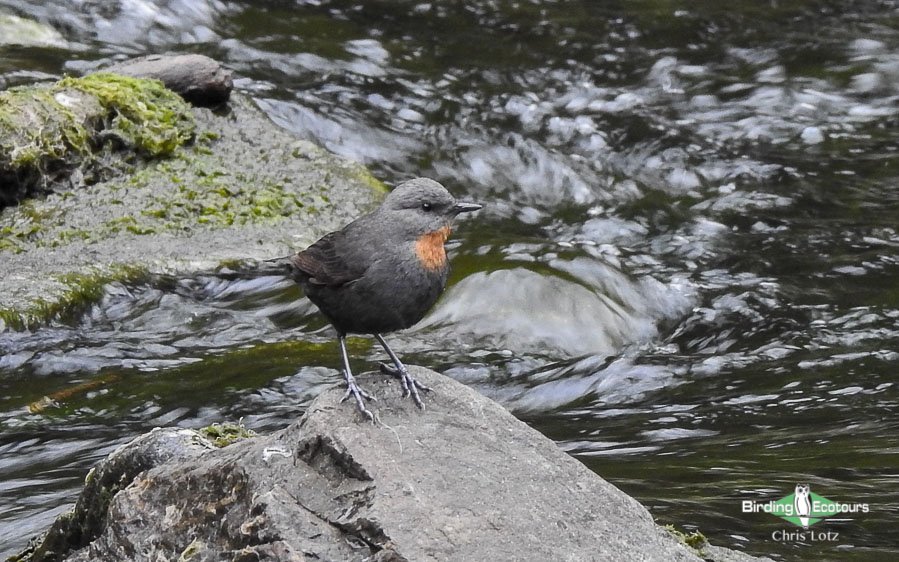
Rufous-throated Dipper is one of the most-wanted targets of the trip.
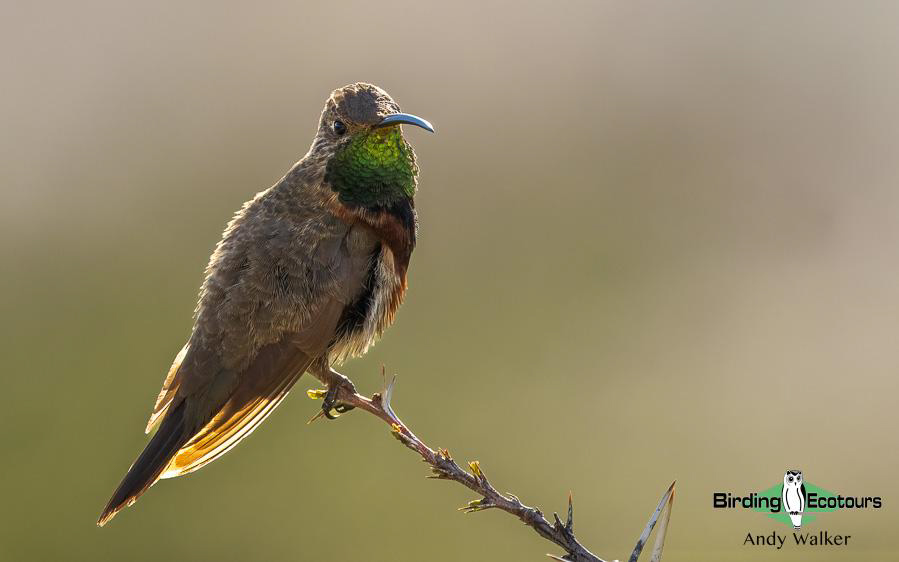
Our northwest Argentina trip can be considered one of the best birding trips in southern South America as it provides a unique set of birds found only in this part of the world. This trip appeals both to seasoned birders and those visiting South America for the first time. During this spectacular 17-day birding trip you may feast your eyes on some of the region’s most-wanted species such as Rufous-throated Dipper, Diademed Sandpiper-Plover, Sandy Gallito, Red-faced Guan, Tucuman Mountain Finch, Moreno’s Ground Dove, Red-tailed Comet, Wedge-tailed Hillstar, the attractive Burrowing Parrot, White-throated Antpitta, Tucuman Amazon, Lyre-tailed Nightjar, Giant Antshrike, Black-legged Seriema and Black-bodied Woodpecker. Other more widespread yet classic Neotropical species will include Andean Condor, Andean Goose, Torrent Duck and Southern Screamer, all highly prized species for those visiting South America for the first time.
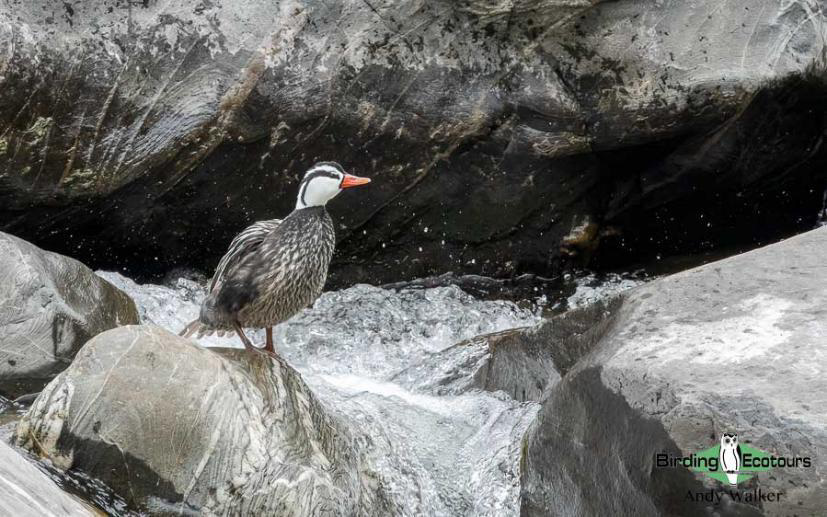 The charismatic Torrent Duck occurs in fast-flowing streams in the foothills of the Andes.
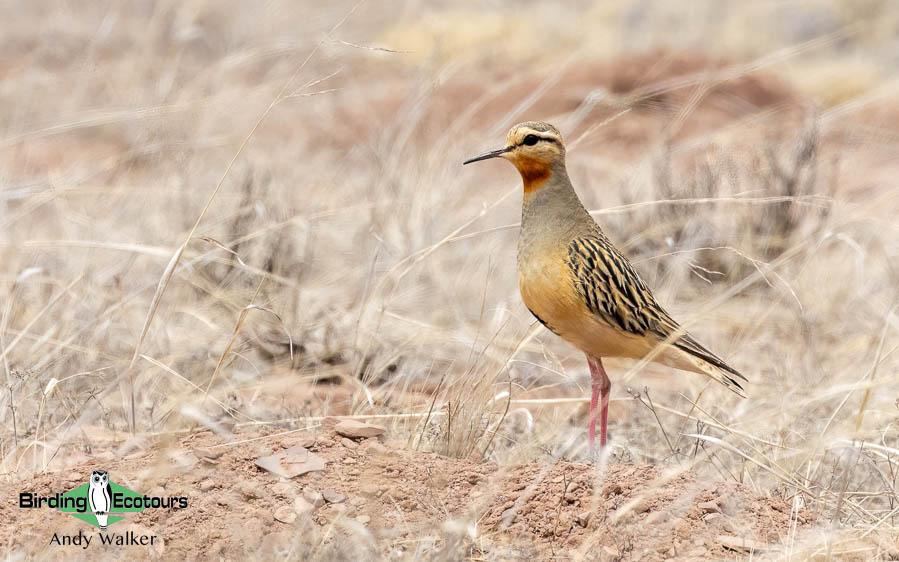
Spectacular rock formations greet you along the way into the Andes. You will find high-altitude alkaline lakes filled with three different South American flamingo species including Chilean Flamingo, Andean Flamingo and James’s Flamingo, one of the world’s rarest members of the family. The trip will provide a unique set of waders too, such as Andean Avocet, Puna Plover, Collared Plover, Tawny-throated Dotterel, Andean Lapwing and the most-wanted Diademed Sandpiper-Plover, a highly attractive wader and considered among the 100 top birds in the world for many birdwatchers.
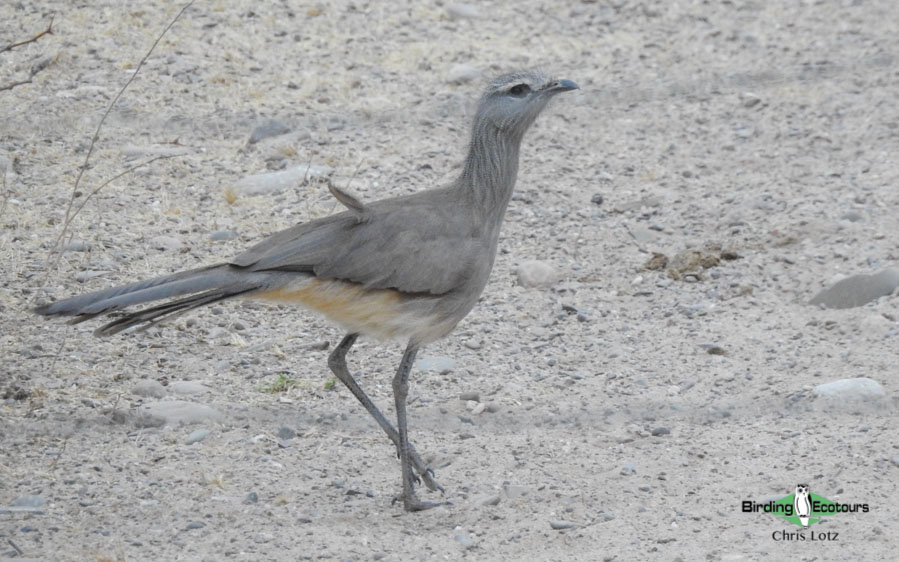
The great Chaco will provide you with both Black-legged and Red-legged Seriemas along with a host of other amazing Chaco birds that, with some luck, will include Lark-like Brushrunner, Black-bodied Woodpecker, Quebracho Crested Tinamou, Chaco Owl and Spot-winged Falconet.
The splendors of the Calilegua National Park include stunning birds such as Yungas Manakin, Golden-collared Macaw, Giant Antshrike, White-throated Antpitta, Tucuman Amazon and with luck, Ornate Hawk-Eagle and Solitary Eagle.
Lowland marshes around Buenos Aires are full of water birds including the likes of Maguari Stork, Limpkin, Black-necked Swan, Plumbeous Rail, Whistling Heron and Southern Screamer which will all help boost our already impressive bird list and crown a fantastic trip.
All in all, this is a spectacular tour through Argentina’s famous wine-growing area taking in some of South America’s classic bird species as we traverse varied and breathtaking landscapes.
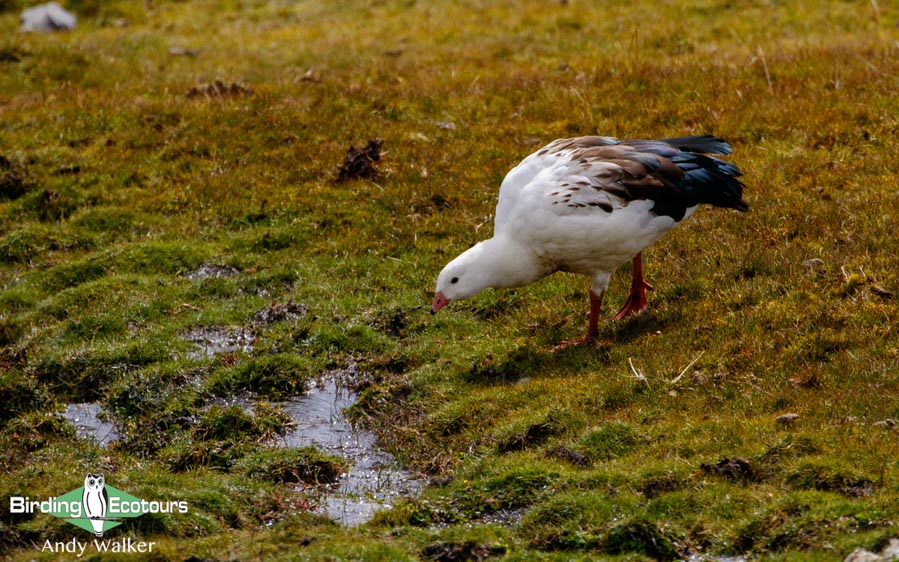 Andean Goose can be seen in high-altitude wetlands.
This tour can be combined with our Argentina: Northeast – Iberá Marshlands and Iguazú National Park birding tour followed by our Argentina: Southern Patagonia – Los Glaciares National Park, Austral Rail and Hooded Grebe birding tour.
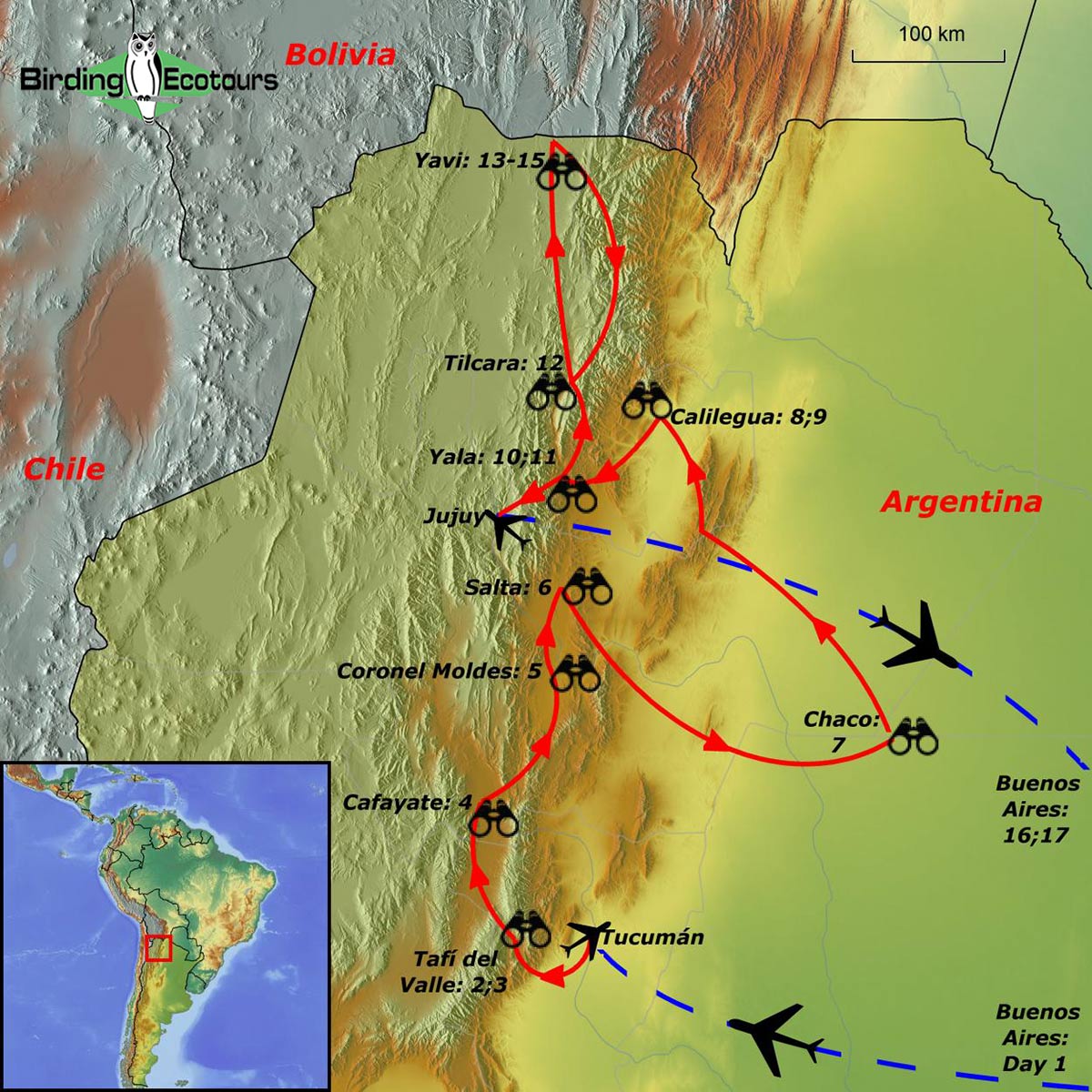
Itinerary (17 days/16 nights)
Day 1. Arrival in Buenos Aires and Costanera Sur Ecological Reserve
We will meet you on arrival at the Ezeiza International airport in Buenos Aires. You will be transferred to the hotel and if time permits, we can spend our first afternoon birding the Costanera Sur Ecological Reserve. This is a wonderful spot located within the city where we might find Coscoroba Swan, the fabulous-looking Rosy-billed Pochard, Masked Duck, Silver Teal and many other wildfowl species. Picazuro Pigeon, Gilded Sapphire, Checkered Woodpecker, Green-barred Woodpecker, Wren-like Rushbird, the brightly colored Red-crested Cardinal, Rufous Hornero and Guira Cuckoo are common here and are certainly full of charisma. Monk Parakeet abounds and we usually also find its stunning-looking cousin, Nanday Parakeet. We also hope to find Rufescent Tiger Heron, Chimango Caracara, Grey-breasted Martin, Masked Gnatcatcher and if we are lucky, Long-winged Harrier.
Overnight: Hotel Pestana, Buenos Aires
Day 2. Flight to Tucumán and transfer to Tafí del Valle
We will fly to Tucumán and drive from here to Tafí del Valle, where we spend two nights. “Along the drive we ascend into beautiful cloudforest (Yungas) and start looking for Rufous-throated Dipper (one of the most important birds of the trip). Other important birds to be found in the area include the spectacular Red-tailed Comet, Yellow-striped Brushfinch, Rusty-browed Warbling Finch, White-browed Tapaculo, Torrent Duck, Grey-hooded Parakeet, Aplomado Falcon, Variable Hawk, Plain-mantled Tit-Spinetail, Brown-capped Tit-Spinetail and Ornate Tinamou.
Overnight: Hostería Lunahuana, Tafí del Valle
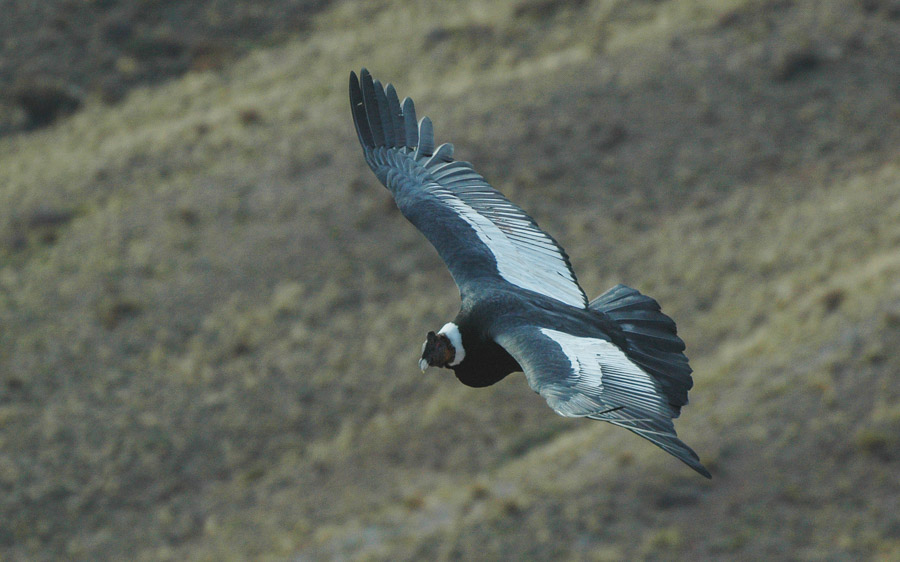 Andean Condor is an iconic bird of the high Andes (photo Alejandro Tello).
Day 3. Birding the Tafí del Valle area
This always proves to be an exciting, birding-packed day, as we bird at various altitudes. We start the day by ascending the El Infiernillo Pass until we are high above the tree line, often seeing Burrowing Owl and the good-looking Black Siskin. We will enjoy some short walks at a couple of high-altitude sites in search of a mouth-watering list of targets. These include two Argentinian endemics, Moreno’s Ground Dove and Tucuman Mountain Finch. Andean Flicker is fairly common in the area and likes to sit atop boulders. This is also usually where we see our first Andean Condor and with luck, we might also encounter Cinereous Harrier. Various high-altitude finches abound too. We have a special site for Scribble-tailed Canastero, but this involves a steep walk, so do speak to your guide in advance in case you want to skip this. It’s worth seeing though as it’s a highly range-restricted species! While here we will also look for Rock and Buff-breasted Earthcreepers, Maquis Canastero, Monte Yellow Finch, Rufous-bellied Mountain Tanager and Brown-backed Mockingbird.
After what will hopefully have been an amazing morning, we will enjoy lunch and then head to a small lake, where we hope to see Andean Goose, Andean Coot, Andean Gull and others. Usually, we then continue back to the cloudforest to clean up on species we may have missed the previous afternoon, Rufous-throated Dipper, of course, being the main target if we haven’t seen it yet.
Overnight: Hostería Lunahuana, Tafí del Valle
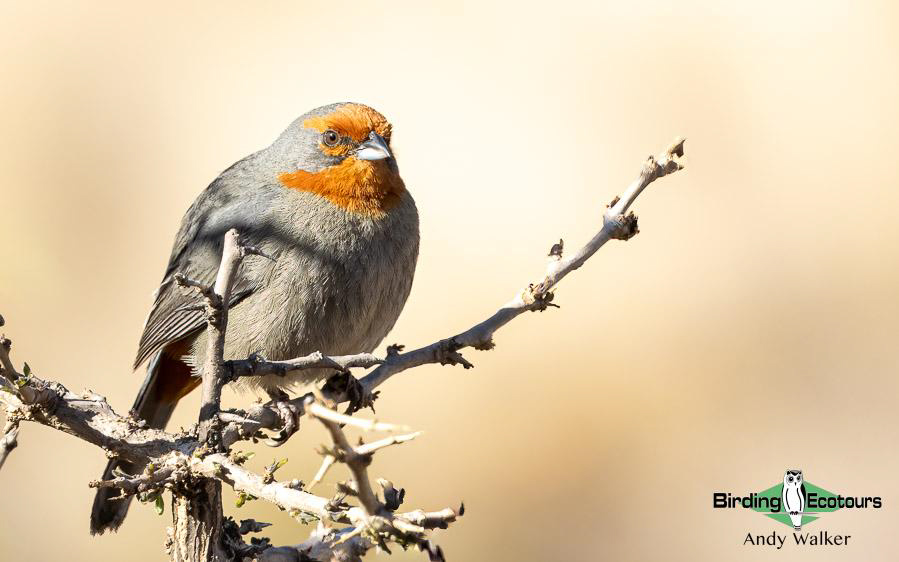 The range-restricted Tucuman Mountain Finch may be seen at high elevation in the Andes Mountains.
Day 4. Birding the Monte Desert
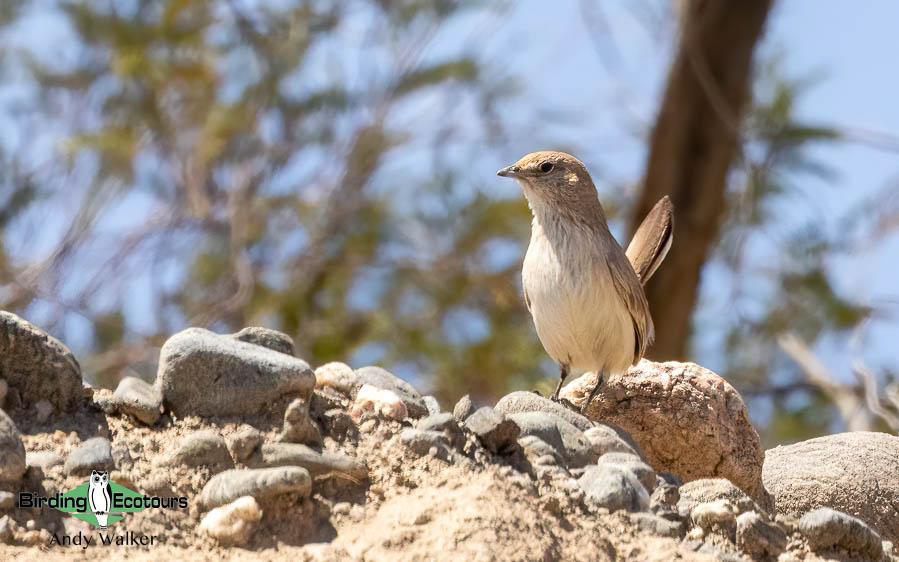
We will leave Tafí del Valle and ascend the El Infiernillo Pass, continuing beyond into the dry Calchaquí Valleys and birding the majestic Monte Desert with its large cacti. The poorly known Sandy Gallito, White-throated Cacholote (Argentina endemic) and Patagonian Mockingbird are the major targets. We will of course look for many other species, such as Greenish Yellow Finch, Rufous-sided Warbling Finch, Ringed Warbling Finch, White-browed Brushfinch, Band-tailed Sierra Finch, Black-winged and Moreno’s Ground Doves, Slender-billed and Rufous-banded Miner, Streak-fronted Thornbird, Streak-backed Canastero, White-browed Chat-Tyrant and the noisy Greater Wagtail-Tyrant.
Overnight: Viñas de Cafayate Wine Resort
Day 5. Cafayate to Coronel Moldes
We will continue our exciting journey as we traverse the spectacular scenery of Argentina’s wine country looking for Long-tailed Meadowlark, Burrowing Parrot, Tufted Tit-Spinetail, Yellow-billed Tit-Tyrant, Rusty-vented Canastero, the endemic Steinbach’s Canastero, Many-colored Chaco Finch, Band-tailed Sierra Finch, Green-barred and White-fronted Woodpeckers, Golden-billed Saltator, Chaco Earthcreeper, White-tipped Plantcutter, Ultramarine Grosbeak, Pampa Finch, Stripe-crowned Spinetail, and, as always, many others.
We will spend some of the morning driving through the picturesque Enchanted Valley. After lunch we spend some time birding transitional forest in the canyon formed by the Juramento River. We’ll be looking for sought-after denizens of this arid region, including Crested Gallito, Spot-winged Falconet, Red-legged Seriema, Black-chested Buzzard-Eagle and the poorly known Sandy Gallito.
Overnight: Hostería Cabra Corral, Coronel Moldes
Day 6. Bishop’s Slope via Los Cardones National Park
The scenery today arguably gets even better (if that is possible) as we drive through Los Cardones National Park and other remarkable areas. We might see our first of some unusual and spectacular hummingbirds such as Red-tailed Comet and White-sided Hillstar while Rufous-bellied Mountain Tanager is also one of our key targets. We should add further parrots to our list which might include Scaly-headed Parrot and Grey-hooded Parakeet. Zimmer’s Tapaculo is another high-altitude species that we really hope will cooperate with us. Thankfully, Rock Earthcreeper and Rufous-banded Miner are usually easy enough to find.
Finally, we will head to Salta looking for Cream-backed Woodpecker, Smoke-colored Pewee, Rough-legged Tyrannulet, White-bellied Hummingbird, the beautiful Plush-crested Jay, Golden-winged Cacique and Grey-cowled Wood Rail.
Overnight: Hotel Boutique Villa Vicuña, Salta
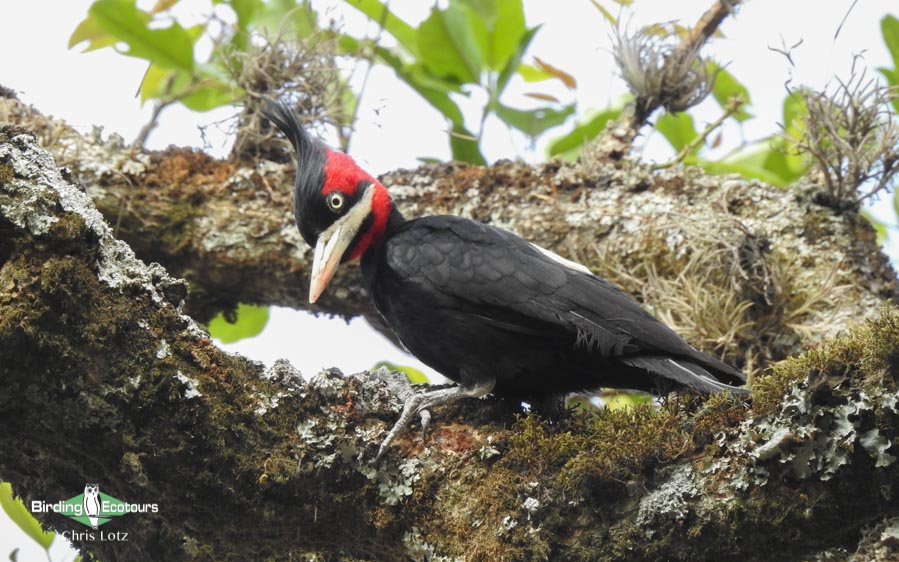 The handsome Cream-backed Woodpecker is possible around Salta.
Day 7. Salta to the Chaco habitats of Joaquín V. González
Today we will explore the Chaco where a diverse array of new birds awaits us. This dry desert, dominated by scrub and large cacti, is found only in northern Argentina, Paraguay and southern Bolivia. There is a long list of highly desired species, such as Black-legged Seriema, Tataupa Tinamou, Brushland Tinamou and the spectacular-looking Quebracho Crested Tinamou, Chaco Chachalaca, Many-colored Chaco Finch, Black-bodied Woodpecker, spectacular woodcreepers such as Red-billed Scythebill, Scimitar-billed Woodcreeper, Great Rufous Woodcreeper and their smaller relative, Narrow-billed Woodcreeper. Spot-backed Puffbird will hopefully be added to our list at some point. Spot-winged Falconet is never easy, and it usually needs quite a bit of work. Much easier are Lark-like Brushrunner, Crested Hornero, and the sometimes-skulking Crested Gallito, with Chaco Earthcreeper hopefully added to the list too. As always, there are far more birds than we can mention here, and these two days represent the most productive days of the trip in terms of adding many high-quality species to our growing bird list. We should mention that we’ll be sure to try for Chaco Owl at night.
Overnight: Las Lajitas, Chaco
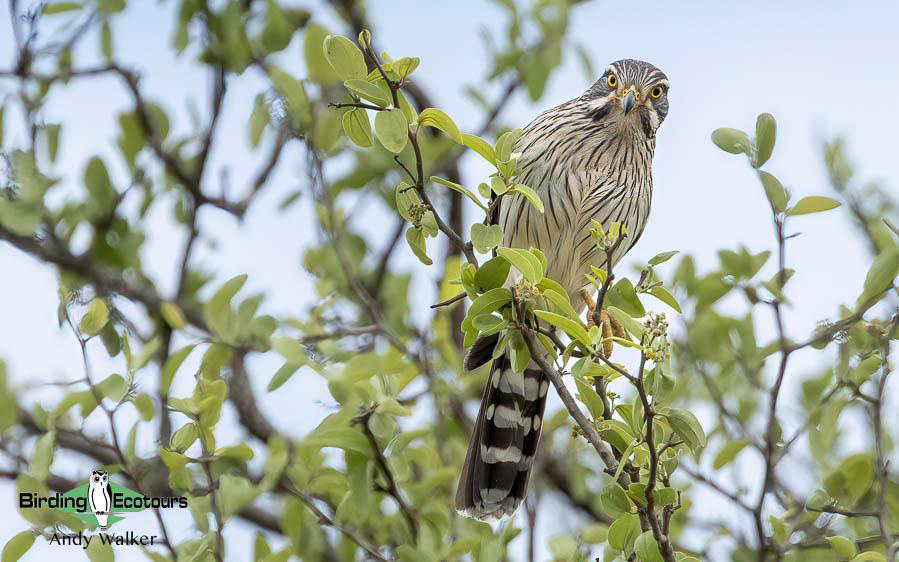 The most-wanted Spot-winged Falconet is one of the main targets in the Chaco.
Day 8. Chaco habitats at Joaquin V. González to Calilegua National Park
This is another day looking for specials of the thorny habitats of the Chaco woodlands. Among the many species we might encounter are Greater Rhea, Tataupa Tinamou, Bicolored Hawk, Blue-crowned Parakeet, Striped Cuckoo, Ferruginous Pygmy Owl, Blue-tufted Starthroat, Spot-backed Puffbird, Chaco Earthcreeper, White-barred Piculet, White Woodpecker, Campo Flicker, Turquoise-fronted Amazon, Great Antshrike, Variable Antshrike and Stripe-backed Antbird. From here, we drive to Calilegua National Park, looking for birds we may have previously missed.
Calilegua National Park is a stunning destination for birding which protects important Yungas cloudforest habitat, and we will get to explore this impressive park and its avifauna over the next couple of days.
Overnight: Posada del Sol, Calilegua
Day 9. Birding Calilegua National Park
We will spend an entire day in Calilegua National Park itself where we will target a long list of tantalizing birds. The steep, forested slopes are home to birds like Black-and-white Hawk-Eagle, Black-and-chestnut and Solitary Eagle, Bat Falcon, Yungas Guan, Golden-collared Macaw, Speckled Hummingbird, Blue-capped Puffleg, Slender-tailed Woodstar, Blue-crowned Trogon, Yungas Manakin, Golden-olive Woodpecker, Great Rufous and Black-banded Woodcreeper, Giant Antshrike, Sclater’s Tyrannulet, White-throated Antpitta, Mountain Wren, Speckled Nightingale-Thrush, Glossy-black Thrush, Rusty-browed Warbling Finch, Grey-browed Brushfinch, Crested Oropendola and Yungas Pygmy Owl.
Overnight: Posada del Sol, Calilegua
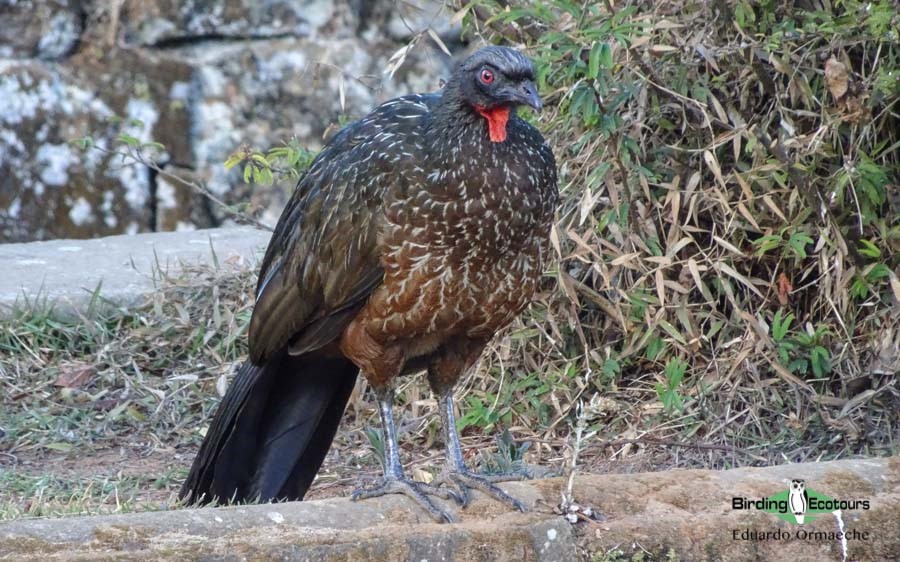 Yungas Guan can be seen in the forests of Calilegua National Park.
Day 10. Calilegua to Potrero de Yala Provincial Park
Today will be our second day birding in this lush region of Calilegua National Park and we will bird beyond the park as far as the small town of San Francisco. We will look for species such as Blue-crowned Trogon, Toco Toucan, Dot-fronted Woodpecker, Streaked Xenops, Ochre-faced Tody-Flycatcher, Mottle-cheeked Tyrannulet, Moss-backed Sparrow, Two-banded Warbler, Orange-headed Tanager, Ochre-cheeked Spinetail, Brown-capped Whitestart, Andean Slaty Thrush, White-tailed Kite, Swallow-tailed Kite and the shy White-browed Tapaculo.
Over the last few years, a pair of Harpy Eagles has sometimes been seen from the upper roads of the park, although we would consider ourselves most fortunate with a sighting of this massive eagle! In the afternoon we will drive from Calilegua to Potrero de Yala Provincial Park, another wonderful transitional Yungas habitat.
Overnight: La Posta del Lozano, Yala
Day 11. Potrero de Yala Provincial Park
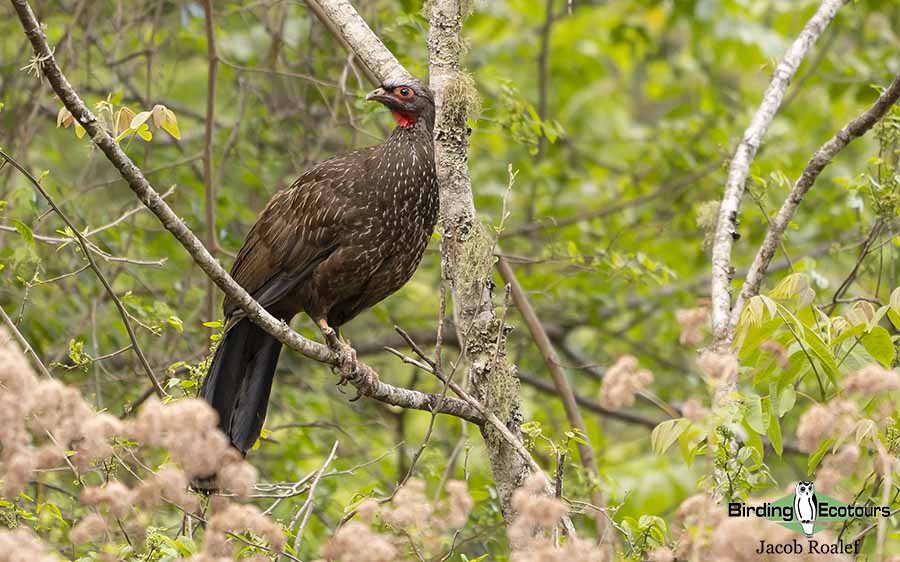
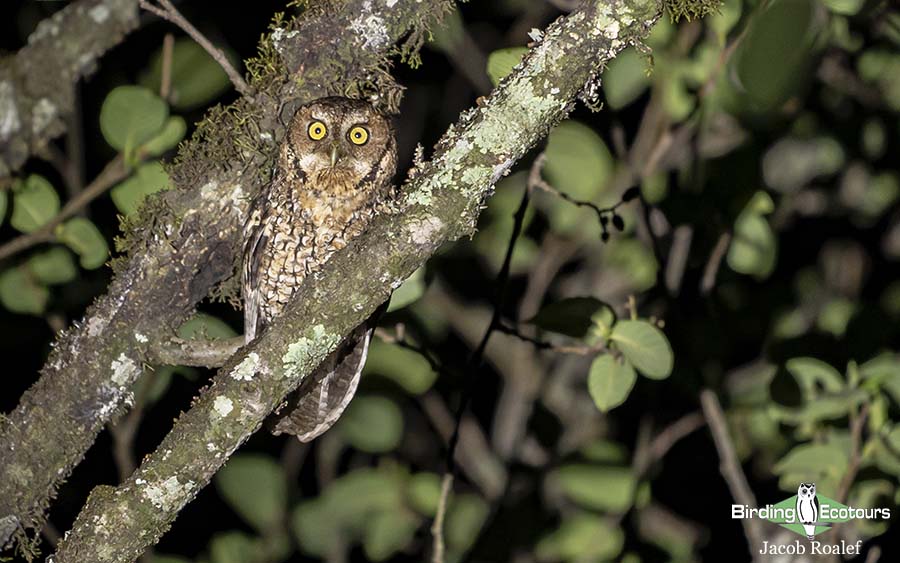
Today we will have a predawn start to look for some night birds including the spectacular male Lyre-tailed Nightjar and Yungas Screech Owl which are usually not too difficult to find on the outskirts of town. Red-faced Guan is one of our major targets and can be tricky, but of course we usually find it with persistence. The localized Tucuman Amazon is another target of this trip. We will also look for Streak-throated Bush Tyrant, Chilean Elaenia, Rufous-capped Antshrike, Spot-breasted Thornbird, Buff-browed Foliage-gleaner, Mountain Wren, Sooty-fronted Spinetail, Blue-and-yellow Tanager, Glittering-bellied Emerald, Yellow-browed Tyrant, Crested Becard and Golden-rumped Euphonia.
Overnight: La Posta del Lozano, Yala
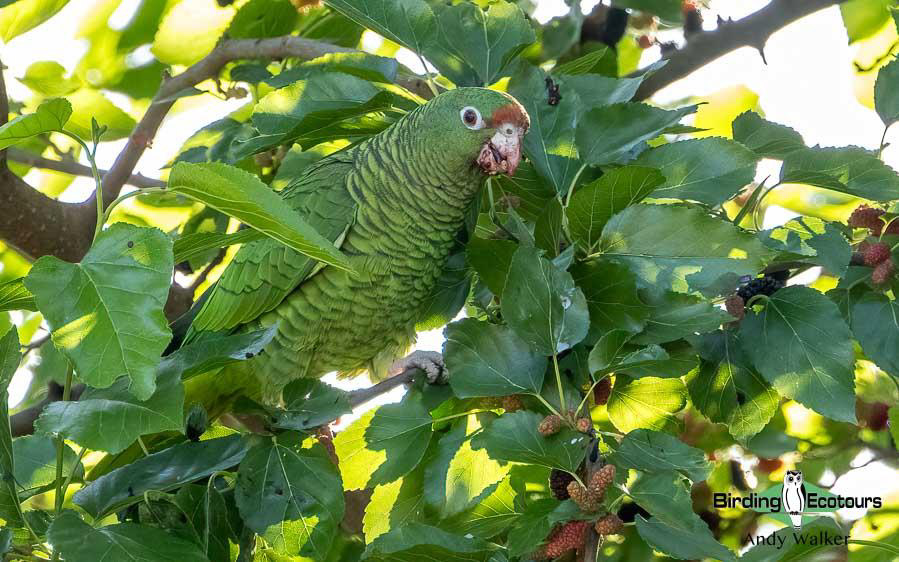 Tucuman Amazon, yet another localized special, we will target on this tour.
Day 12. Birding the Humahuaca Ravine
Today we drive higher along the Humahuaca Valley, birding the puna salt lakes and highland lake habitats as we approach the town of La Quiaca on the Bolivian border at 12,000 feet (3,660 meters). We’ll bird the dry valley along the way, looking for Lesser Rhea, Andean Condor, Mountain Caracara, Mountain Parakeet, Andean Swallow, Rufous-banded and Puna Miners, Puna Yellow Finch, Andean Negrito, Brown-backed Mockingbird, Black-hooded Sierra Finch and Black Siskin. From here, we will continue our drive towards Tilcara.
Overnight: Hotel Las Marias, Tilcara
Day 13. Puna Lakes and transfer to Yavi
From Tilcara, we will continue driving northward (and higher), passing a number of lakes, where we have the chance to admire the stunning Argentinean Altiplano, while hopefully finding Andean Gull, Andean and Giant Coots, Andean Goose, Puna Teal, Crested Duck, Puna Ibis, Andean Avocet, Puna Plover, Chilean, Andean and James’s Flamingos, Cordilleran Canastero and Grey-breasted Seedsnipe.
Overnight: Posada Tika, Yavi
Day 14. Yavi
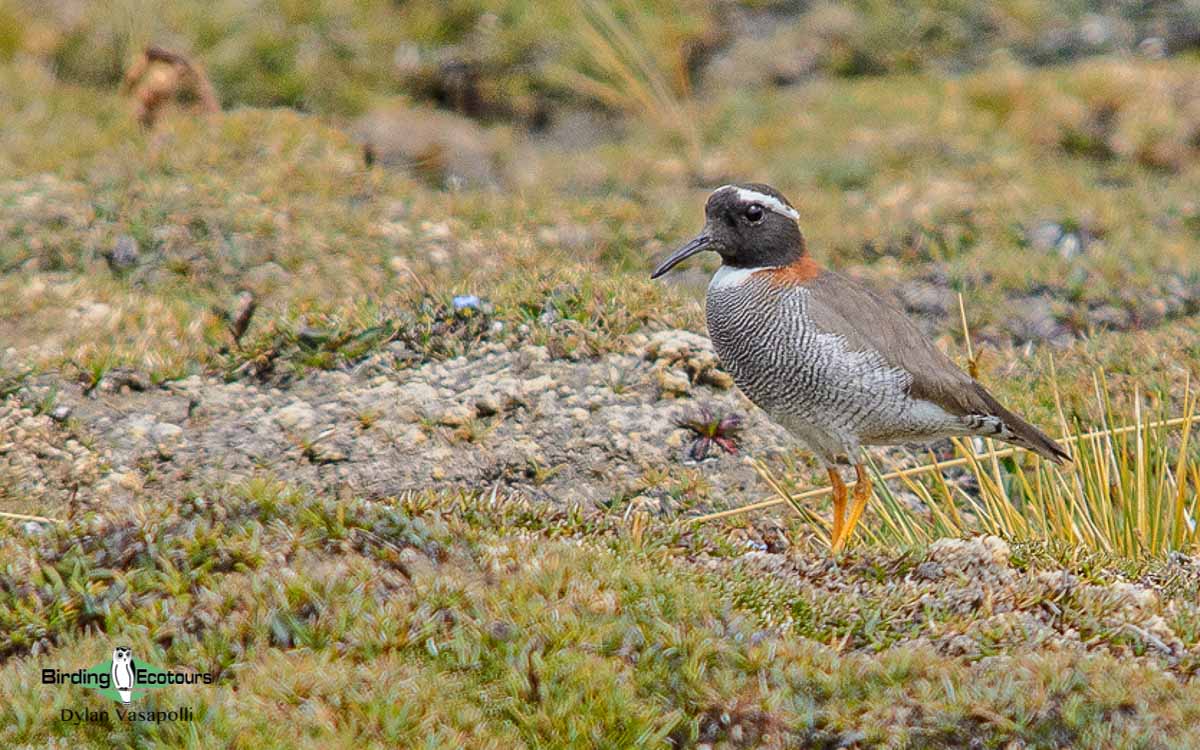
Yavi is a small hamlet that is home to the range-restricted Citron-headed Yellow Finch. We will also bird the highland valleys above, looking for Red-backed Sierra Finch. Here we will also look for Mourning Sierra Finch, Puna and Bright-rumped Yellow Finches, Black-billed Shrike-Tyrant, Cream-winged Cinclodes and Spot-winged Pigeon. The star bird, however, is Diademed Sandpiper-Plover, a rare high-elevation wader restricted to mossy tundra, grasslands and bogs in northern Argentina, Chile, Bolivia and Peru.
Overnight: Posada Tika, Yavi
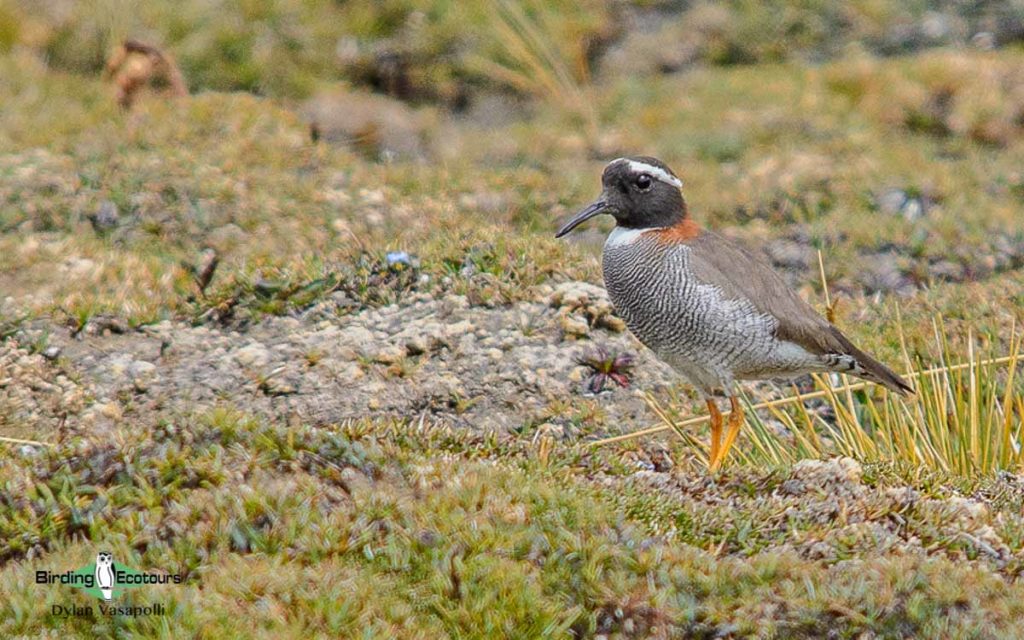 The Diademed Sandpiper-Plover is another trip target in the high Andes of Argentina.
Day 15. Birding the high Puna
From Yavi we ascend to over 12,000 feet (3,660 meters), searching for further specials such as Lesser Rhea, Ornate Tinamou, Puna Tinamou, Puna Yellow Finch, Puna, Spot-billed and Rufous-naped Ground Tyrants, Grey-bellied Shrike-Tyrant, Straight-billed Earthcreeper, Golden-spotted Ground Dove, Common and Puna Miners and Andean Swallow. The high Andes of northern Argentina is a good area to find other wildlife like Guanaco, Vicuna, Montane Vizcacha and with luck, the distinctive Highland Tuco-Tuco, an endemic burrowing rodent of this part of the continent that resembles North American Prairie Dogs.
Overnight: Posada Tika, Yavi
Day 16. Flight from Jujuy to Buenos Aires
We bird the area further, then eventually drive to Jujuy (about 1.5 hours away) for our afternoon flight back to Buenos Aires. Here, back in the big city, we hope to have some time to clean up on birds we may have previously missed.
Overnight: Hotel Pestana, Buenos Aires
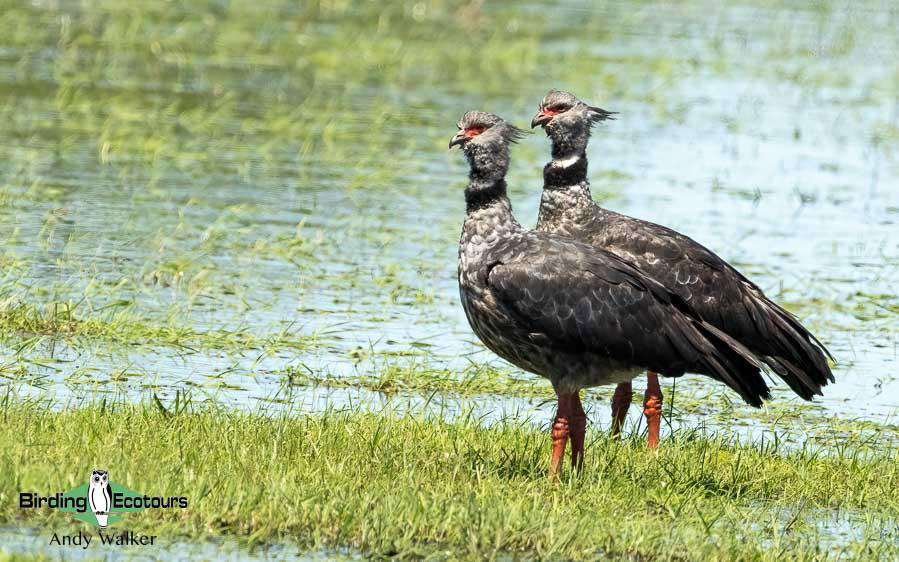 The unusual Southern Screamer is often seen in wetlands near Buenos Aires.
Day 17. Otamendi Reserve and transfer to Ezeiza International airport
On our final day, we will invest some time in the morning to visit the Otamendi Reserve near Buenos Aires. The wetlands here host an impressive diversity of water species including Southern Screamer, Brazilian Teal, Limpkin, Whistling Heron, Giant Wood Rail, Plumbeous Rail, Black-necked Swan, Anhinga, Wood Stork, Maguari Stork, Cocoi Heron, Rufescent Tiger Heron, White-winged Coot, White-faced Ibis, Cinnamon Teal, Wattled Jacana and Fulvous Whistling Duck. Other species include Snail Kite, Grassland Yellow Finch, Many-colored Rush Tyrant, Yellow-chinned Spinetail and the most-wanted Curve-billed and Straight-billed Reedhaunters, both secretive reed dwellers and among the most-prized furnarids for birders.
After a busy morning at Otamendi we will return to the hotel and be transferred to the Ezeiza International airport to connect with our international flights.
Please note that the itinerary cannot be guaranteed as it is only a rough guide and can be changed (usually slightly) due to factors such as availability of accommodation, updated information on the state of accommodation, roads, or birding sites, the discretion of the guides and other factors. In addition, we sometimes have to use a different international guide from the one advertised due to tour scheduling.
Map
Testimonials
Gallery
General Information
NORTHWEST ARGENTINA: YUNGAS, CHACO AND HIGH ANDES BIRDING TOUR
TOUR-SPECIFIC INFORMATION
PLEASE CLICK HERE FOR GENERAL INFORMATION PERTAINING TO OUR ARGENTINA TOURS IN GENERAL
This birding trip is an amazing adventure that will allow you to explore the fantastic variety of habitats of northwest Argentina. From the wetlands of Buenos Aires, where you should get acquainted with the likes of Spectacled Tyrant, Curve-billed and Straight-billed Reedhaunters, through to the dry desert of the vast Chaco, where we will look for specials such as Black-bodied Woodpecker and Black-legged Seriema. We will then see a drastic change in scenery as we visit the lush Yungas or humid montane forest in the Calilegua National Park and the Tucumán forest, looking for incredible birds such as Rufous-throated Dipper, Red-faced Guan, Black-and-chestnut Eagle, White-throated Antpitta, and Golden-collared Macaw. We will end this adventure in the high Andes of the Argentinean altiplano near the Bolivian border, where we will enjoy stunning high-altitude scenery and hopefully find desirable species such as Lesser Rhea, Horned Coot, Puna Tinamou, Diademed Sandpiper-Plover and many more. This tour, together with our central Peru tour, provides perhaps the finest quality Andean birding of any of our tours. The following information, in combination with the Argentina general information, will help you prepare for your trip.
ARRIVAL INFORMATION
Please e-mail us ([email protected]) or “contact us” in a different way, before you book any flights, as the information shown here is just an initial guide.
Our tour will start in Buenos Aires, the capital city of Argentina. You can reach Buenos Aires’ Ministro Pistarini International Airport, better known as Ezeiza Airport (EZE), by flights from most major hubs around the world. You might wish to consult your travel agent to book your most convenient flight (and contact us if you would like any guidance). Our representatives will be waiting for you at Buenos Aires airport, with a Birding Ecotours sign board and will then transfer you to your hotel. Please remember to keep your luggage tags, as they are required to exit the terminal building at the Buenos Aires airport. Please be aware that most international flights arrive in Buenos Aires around midday, so we don’t have any birding activities planned for the first “arrival” day. In case you arrive on an early flight, you will be transferred to the hotel but may have to wait until check-in is available. For an early check-in you might be charged extra by the hotel; this cost is not included in the Birding Ecotours tour price. Usual hotel check-in is at 15:00 hrs.
When filling out the customs declaration form, if an address in Argentina is required, you can use the hotel address below, this is where we usually stay in the city:
Hotel Pestana Buenos Aires, Carlos Pellegrini, 877, C1009ABQ, Buenos Aires. Tel: (+54) 011-5239-1000.
DEPARTURE INFORMATION
Our tour will end in Buenos Aires after a wonderful 17 days birding in Argentina. After the final morning’s birding, your tour leader and/or tour representatives will transfer you to the Ezeiza Airport from where you can take your international flights home or join our next Argentinian tour.
DOMESTIC FLIGHT INFORMATION
Our tour includes two internal flights from Buenos Aires to Tucumán (2.00 hrs. flight) and from Jujuy to Buenos Aires. (2.10 hrs. flight). Aerolineas Argentinas (AR) is a governmental airline but the biggest and strongest in Argentina with the greater frequency of flights within the country at date. We are likely to use this airline but may at times use others. Luggage allowances for these flights are likely to include:
- 1x piece (small bag such a laptop case) of 3 kg. (6.6 lbs.) for carry-on
- 1x bag 8 kg. (17.6 lbs.) carry-on luggage
- 1x piece of luggage of 15 kg. (33 lbs.) as checked luggage
For extra luggage or excess weight see here. At the time of writing (April 2025), the airline charges an additional fee to the air ticket of Argentine Peso ARS 21,000 (approximately US$ 18) per kilogram (2.2 lbs.). This fee is not included in the tour price. The payment is made by the person at the moment of check in with the airline and it can be paid either with Argentine Peso cash or by credit card, US$ cash is not accepted. Note this fee is subject to change without prior notice.
If you carry cameras, be sure they fit in standard camera bags which normally are fine as carry-on baggage. The bag size allowed is 55 cm x 35 cm x 22 cm (22 in x 14 in x 10 in). Cameras in larger cases, or other equipment such as professional videography camera and lens, flash units, etc. will probably be required to be checked in as cargo hold under their fragile category or with crew luggage or baby car compartments. Sending camera equipment into the hold luggage (or any other form of transportation) is entirely at your own risk.
We will book the domestic flights for you to make sure the whole group is on the same flight and the costs for these flights will be added to your tour balance. If we can purchase flight tickets in advance with a higher weight limit, we will do and we will let you know when we make the bookings.
PHYSICAL REQUIREMENTS AND PACE
We grade this trip as easy to moderate going, with most of the birding consisting of walking along roads and birding near to the vehicle. We will walk no more than 2.5 miles (4 km) per day and the vehicle will remain near to us, as much as possible.
Please note that (as is usual on our birding trips) we need to be awake very early in the mornings, and pre-dawn starts are in order almost every day. We normally spend the whole morning birding in the field, return to the lodge for lunch (followed by some rest), before continuing our birding in the afternoon. In some cases, particularly in remote areas, we will take picnic lunches along with us. When we have birding stops while traveling from location to location, people who feel tired do not have to follow the group and can remain in the vehicle.
Argentina is a big country, the second largest in South America, and as such this tour includes some long drives with much climbing in and out of the vehicle when we find interesting birds or suitable habitat en route. A positive of these long drives is that they will allow us to enjoy the amazing scenery and maximize our chances for unexpected birds along the route.
We think this trip might be difficult for people who battle with high elevations or who have back, walking, or balance problems. If you feel motion sickness, we ask you to bring your own medication. Furthermore, if you are not used to birding trips with early starts every morning, you may find this tour tiring.
ATM MACHINES
ATM machines are available in Buenos Aires, Cafayate, Callilegua, and Tilcara. We recommend drawing money from ATMs or exchanging money at the bureau de change in the Buenos Aires airport upon arrival. Local currency may be difficult to obtain while on tour and may eat into our birding time and so we highly recommend sorting this out while at the airport.
ALTITUDE
Our tour starts in the lowlands and then gradually gains in altitude; this steady increase in altitude will give your body time to adapt to high altitude conditions. Please note that we will drive across some mountain passes above 13,450 feet (4,100 meters), with our highest overnight point being in Yavi (where we will spend three nights), at 11,500 feet (3,500 meters). We will always have a vehicle near us while we bird at these altitudes, which will help reduce fatigue.
Spending a few hours at high elevation is not normally a problem, however, some minor symptoms might appear, such as a slight headache and mild dizziness. A regular Paracetamol tablet, taken two hours before we reach high elevations, often prevents any headache trouble. We suggest you avoid eating a large dinner on the previous night (before visiting high altitudes) which will aid with easier digestion. Please inform your tour leader if you experience any symptoms of altitude sickness.
WEATHER
We ask you to be ready for all kinds of weather during this trip. The range of habitats and altitude that we will pass through will mean we will also encounter a diverse array of weather conditions. In general, the weather will be subtropical (we will in fact cross the Tropic of Capricorn on the tour), but in the heights of the Andes it can be very cold, especially at night and in the early mornings. The eastern lowlands are usually warm and can even be hot in the winter. The Puna and high Andes can reach warm temperatures during the day, but at night, the temperatures decrease drastically; sometimes to below freezing. While birding some of the high Andean peaks, there is even the possibility of snowfall. October and November are still part of the “dry season” and therefore we should expect very little rain; any rainfall that we experience will likely be in the Yungas or cloud forest. Conversely, the Chaco is likely to be hot and dry.
Sometimes cold fronts from Antarctica can blow towards southern South America and as a result we might get unexpected cold winds reaching southern Argentina and Buenos Aires city for a couple of days when temperatures may drop to as low as 34 °F (1 °C).
ACCOMMODATION
We will provide you with a list of hotels and emergency phone numbers before the start of the tour. Weblinks (if there is one), for accommodation we will be using during the tour will be included in the final itinerary document. We use a range of accommodation on this tour, much of our route takes us through fairly remote areas so a fair amount of accommodation is basic.
LAUNDRY
Laundry is available almost everywhere, but we suggest you try to get laundry done in those locations where we will stay for more than one night, such as in Buenos Aires, Tafí del Valle, Calilegua, and Yavi. Laundry fees are not included in the tour price.
PACKING FOR THE TRIP
Due to the complex weather conditions described above, packing clothing for this trip can be difficult. We recommend you take with you a good amount of light clothing (long-sleeved shirts and long pants to avoid insect bites), a light coat for the nights in the lowlands, while for the highlands, a warmer coat and a good sweater are recommended, a scarf and woolly gloves are also suggested. It is also essential to bring closed shoes (two pairs if possible), a raincoat (“ponchos” are quite useful) and a good hat. Along with that, you should bring sunglasses, sunscreen, and insect repellent (high DEET content), as mosquitoes, biting flies and ticks are a possibility on the trip, especially in the cloud forests and at lower altitudes.
The following is a list of some additional items that might be useful to bring on this tour:
- Small travel umbrella
- Walking stick (optional, particularly necessary if you are at all uncertain on your feet)
- Personal medication and prescription in case you need to buy some extra
- Torch (flashlight) and/or headlamp (headtorch), and spare batteries
- Universal electric adaptors for all outlets
- An extension cable (e.g. 3 meters / 10 feet long) with a surge adaptor (optional) can be useful for providing multiple charging outlets, which can sometimes be located in inconvenient locations in the room (e.g. far from the bedside tables/desk etc.)
- Small hand towel/bandana to clean your own sweat in the field
- Plastic zipper (Ziplock) bags to protect your documents like passports, cash etc.
- Personal amenities
- Tick removal tool

Download Northwest Argentina Tour-Specific Information
Download Argentina General Information